
Contacyphon cooperi
(Schaeffer, 1931)
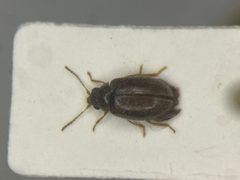
Contacyphon cooperi is a small marsh beetle in the Scirtidae, a group of aquatic and semi-aquatic beetles commonly known as marsh beetles or minute marsh beetles. The was described by Schaeffer in 1931 and is documented from North America. Scirtidae larvae are typically found in moist or aquatic , often in decaying vegetation or mud, while are frequently collected at lights or in vegetation near water.
Pronunciation
How to pronounce Contacyphon cooperi: /ˈkɔntəˌsaɪfən ˈkuːpəri/
These audio files are automatically generated. While they are not always 100% accurate, they are a good starting point.
Identification
Identification to level in Contacyphon requires examination of fine morphological details, particularly of the genitalia and elytral punctation patterns. The Contacyphon is distinguished from related scirtid genera by features of the , pronotum, and male genitalia. C. cooperi specifically is characterized by details of the and parameres as described in the original description by Schaeffer (1931).
Images
Habitat
As a member of Scirtidae, this is associated with marshy or wetland . Larvae of marsh beetles typically inhabit moist substrates including decaying plant matter, mud, and shallow aquatic environments. are often found in vegetation near water or attracted to lights.
Distribution
North America. Specific locality records are sparse, with the known from limited documented occurrences.
Life Cycle
Marsh beetles (Scirtidae) have aquatic or semi-aquatic larvae that feed on decaying organic matter. Larvae typically pupate in moist soil or mud near the water's edge. are terrestrial but remain associated with moist . Specific details for C. cooperi have not been documented.
Behavior
have been observed at blacklights, indicating activity. This is consistent with many Scirtidae, which are commonly collected using light traps.
Ecological Role
Scirtidae larvae contribute to nutrient cycling in wetland through their feeding on decaying plant material. They serve as a food source for aquatic and terrestrial . The specific ecological role of C. cooperi has not been studied.
Human Relevance
No direct economic importance. Marsh beetles are occasional incidental captures in aquatic insect surveys and blacklight sampling. C. cooperi is not known to be a pest or beneficial in any documented context.
Similar Taxa
- Contacyphon padiAnother North American in the same , distinguished by subtle differences in male genitalia and elytral . Identification requires detailed morphological examination.
- Other Scirtidae genera (e.g., Cyphon, Prionocyphon)These share similar preferences and general body form. Contacyphon is distinguished by antennal structure and pronotal shape, but definitive separation often requires microscopic examination.
More Details
Taxonomic Note
The Contacyphon was established for previously placed in Cyphon and related genera. The of North American Scirtidae remains incompletely resolved, and species limits in Contacyphon may require revision with modern molecular and morphological methods.
Collection Records
GBIF and iNaturalist records indicate very few documented observations of this , suggesting it is either genuinely rare, under-collected, or difficult to identify without specialized expertise. Only 2 observations are recorded in iNaturalist as of the knowledge cutoff.