
Onthophagus hecate
(Panzer, 1794)
scooped scarab
Species Guides
1- Onthophagus hecate blatchleyi(Scooped Scarab)
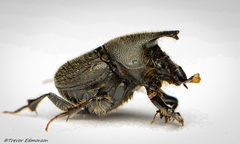
Onthophagus hecate, commonly known as the scooped scarab, is a small dung beetle in the Scarabaeidae. Males are distinguished by a broad, forked horn projecting from the , which they use in combat for mating rights. The is known to visit both and carrion, making it functionally important in decomposition and nutrient cycling. Research has identified this as particularly sensitive to certain cattle parasiticides, especially long-lasting .
Pronunciation
How to pronounce Onthophagus hecate: /ɔnˈθɒfəɡəs ˈhɛkəti/
These audio files are automatically generated. While they are not always 100% accurate, they are a good starting point.
Identification
The forked thoracic horn in males is distinctive and separates this from similar small Onthophagus. At 6–9 mm, it is among the smaller dung beetles in its range. Presence at both and carrion sites may aid detection, though confirmation requires examination of male horn .
Images
Appearance
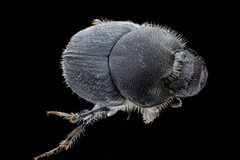
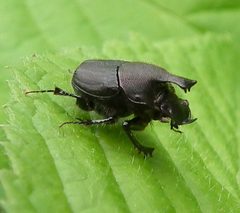
Small measuring 6–9 millimeters in length. Males possess a prominent, broad, forked horn projecting forward from the top of the (pronotum) over the ; females lack this horn. Body form typical of Onthophagus, with compact, rounded shape.
Habitat
Associated with and carrion in open landscapes, including pastures and rangeland. Documented on cattle farms and at carcass sites in Colorado.
Distribution
Recorded from the United States, specifically from Vermont, Colorado, and West Virginia. The Onthophagus hecate hecate occurs in the eastern United States.
Diet
Feeds on and carrion. Has been observed on cattle and at carcass sites including bird and mammal remains.
Behavior
Males use their thoracic horns to battle other males for access to females. The flies readily and has been observed in successional waves at carrion, appearing alongside other carrion-associated beetles.
Ecological Role
Contributes to decomposition by burying and processing and carrion. On cattle farms, mixes into soil, thereby recycling nutrients, reducing methane emissions, and outcompeting pests. Serves as a non-target for environmental impacts of veterinary parasiticides.
Human Relevance
Beneficial in agricultural settings, particularly cattle operations, through burial and soil enrichment. Vulnerable to ivermectin and other persistent parasiticides used in livestock; research has specifically documented from diflubenzuron (Clarifly) and eprinomectin (LongRange), while fenbendazole (Safeguard) showed no adverse effects at tested concentrations.
Similar Taxa
More Details
Parasiticide Sensitivity
Research at West Virginia University found that O. hecate abundance declined in cattle treated with Clarifly (diflubenzuron) and LongRange (eprinomectin), with persisting 30–90 days post-treatment for LongRange. Safeguard (fenbendazole) showed no impact even at 10 mg/kg. This makes O. hecate a useful bioindicator for nontarget effects of veterinary pharmaceuticals.