
Mendidius
Harold, 1868
Species Guides
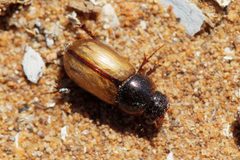
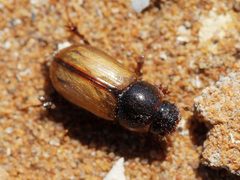
1Mendidius is a of scarab beetles in the Scarabaeidae, Aphodiinae. These beetles are small dung beetles, part of the diverse Aphodiini tribe. The genus was established by Harold in 1868 and contains distributed across the Palaearctic and Nearctic regions. Species in this genus are associated with decomposing organic matter and are part of the in their .
Pronunciation
How to pronounce Mendidius: //mɛnˈdiːdiəs//
These audio files are automatically generated. While they are not always 100% accurate, they are a good starting point.
Identification
Mendidius can be distinguished from other Aphodiini by a combination of morphological features including the shape of the , structure of the with 9-segmented clubs, and specific arrangements of pronotal and elytral punctation. The genus is characterized by small body size (typically 3–6 mm), convex body form, and relatively short, stout legs adapted for burrowing in and soil. Male specimens often exhibit distinctive genitalia structures useful for species-level identification.
Images
Habitat
in this are found in associated with decomposing organic matter, including of herbivorous mammals, compost, and decaying plant material. They occupy open grasslands, pastures, forest edges, and agricultural areas where mammalian herbivores are present. Some species have been recorded from sandy soils and coastal dune systems.
Distribution
The has a transcontinental distribution spanning the Palaearctic and Nearctic regions. In the Palaearctic, records extend from Western Europe through Central Asia to eastern Siberia. Nearctic records include northern Mexico, the United States, and southern Canada. The distribution pattern suggests potential historical across Beringian land bridges.
Seasonality
activity periods vary by and latitude. In temperate regions, most species are active from spring through autumn, with peak abundance during summer months when temperatures favor decomposition and . Some species exhibit bimodal activity patterns with spring and late summer peaks.
Diet
Larvae and feed on decomposing organic matter, specifically herbivore and decaying plant material. They are that process partially decomposed matter rather than fresh dung. The feeding contributes to nutrient cycling in soil .
Life Cycle
Complete with , larva, pupa, and stages. Eggs are deposited in or near suitable organic substrate. Larvae develop through three instars, feeding within the substrate. occurs in constructed in the soil or within the organic material. Development time varies with temperature and substrate quality, with multiple possible per year in favorable conditions.
Behavior
are primarily or , with activity patterns tied to temperature and humidity. They are attracted to fresh deposits by olfactory cues. Mating occurs on or near food sources. Some exhibit gregarious at concentrated food sources. Adults are capable of and disperse to locate new resources.
Ecological Role
As , in this contribute to decomposition processes, nutrient cycling, and soil aeration. Their burrowing activity mixes organic matter into soil profiles. They serve as prey for various vertebrate and . The genus represents part of the functional diversity within dung beetle , though they are not primary removers like larger scarabaeines.
Human Relevance
Indirectly beneficial through services in pasture and agricultural systems. Not considered economically important pests or biocontrol agents. Some may be useful as bioindicators of quality and availability in livestock systems.
Similar Taxa
- AphodiusBoth belong to Aphodiini and share small size, , and -associated . Mendidius differs in clypeal structure, pronotal shape, and specific punctation patterns on the .
- NialusOverlapping distribution and preferences. Mendidius generally have more convex body profiles and different arrangements of elytral .
- MelinopterusSimilar size range and . Mendidius can be distinguished by antennal club structure and male genitalia .
More Details
Taxonomic History
The was described by Edgar von Harold in 1868 based on specimens from the Palaearctic region. Historical revisions have transferred several between Mendidius and related genera based on improved understanding of genitalic and external . Modern phylogenetic studies using molecular data are needed to clarify relationships within Aphodiini.
Conservation Status
No in this are currently assessed by the IUCN. trends are poorly documented, though loss and changes in livestock management practices may affect local abundance. The genus is not considered threatened at the global level.