
Chilothorax distinctus
(Müller, 1776)
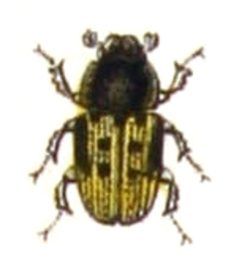
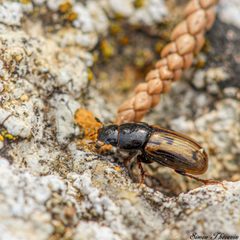
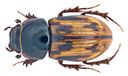
Chilothorax distinctus is a small dung beetle in the Scarabaeidae, Aphodiinae. It is native to the Palaearctic region and has been introduced to North America, where it has established across the United States and Canada. Like other aphodiine scarabs, it is associated with and decaying organic matter.
Pronunciation
How to pronounce Chilothorax distinctus: //kɪloʊˈθɔːræks dɪˈstɪŋktəs//
These audio files are automatically generated. While they are not always 100% accurate, they are a good starting point.
Identification
Distinguished from other Chilothorax and similar aphodiine by subtle morphological characters of the pronotum, elytral striation, and male genitalia. Identification to species level typically requires examination of specimens under magnification or dissection of male genitalia. Distinguished from North American native aphodiines by its Palaearctic origin and associated distribution patterns.
Images
Habitat
Found in open including grasslands, pastures, and agricultural areas where livestock or wild ungulates are present. Associated with of various mammals, particularly in temperate regions. In North America, has been recorded in states and provinces with significant cattle ranching and dairy operations.
Distribution
Native to the Palaearctic region, with records across Europe from the British Isles and Scandinavia south to the Mediterranean, and east through Russia, Kazakhstan, and Mongolia to Central Asia and parts of the Middle East. Introduced and established in North America: recorded in the United States (Florida, California, Colorado, Indiana, Iowa, Maryland, Oklahoma, Texas, Wisconsin) and Canada (Alberta, British Columbia, Manitoba, Nova Scotia, Ontario, Quebec, Saskatchewan).
Diet
-feeding; consumes dung of mammals. Specific preferences not documented but has been observed in cattle pastures and other settings with abundant herbivore dung.
Ecological Role
Contributes to decomposition and nutrient cycling in grassland . As an introduced in North America, its ecological impacts relative to native dung beetle have not been extensively studied.
Human Relevance
An introduced in North America, likely transported inadvertently with livestock, soil, or agricultural products. Its presence in North America appears to be a result of human-mediated . Not considered a pest; contributes to services of removal in agricultural settings.
Similar Taxa
- Other Chilothorax speciesMorphologically similar small aphodiine scarabs; distinguished by subtle differences in pronotal shape, elytral , and male genitalia
- Native North American AphodiinaeSimilar ecological roles and ; distinguished by geographic origin and finer taxonomic characters
More Details
Taxonomic History
Originally described by Müller in 1776. The Chilothorax has undergone taxonomic revision, with some former now placed in related genera.
Introduction to North America
Part of a suite of European dung beetles that have become established in North America, likely arriving through multiple introduction events associated with European and livestock importation.