
Aegialia
Latreille, 1807
Species Guides
14- Aegialia arenaria(dune scarab beetle)
- Aegialia blanchardi
- Aegialia cartwrighti
- Aegialia concinna(Ciervo Aegilian Scarab Beetle)
- Aegialia conferta
- Aegialia convexa
- Aegialia crassa
- Aegialia crescenta(Crescent Dunes scarab beetle)
- Aegialia lacustris
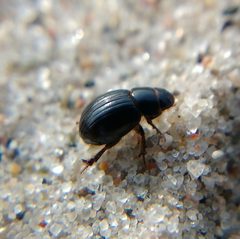
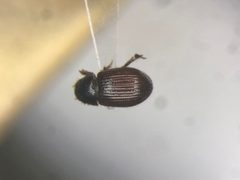
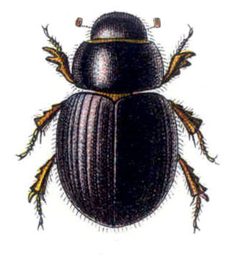
Aegialia is a of aphodiine dung beetles in the Scarabaeidae, established by Latreille in 1807. in this genus are distributed across the Palaearctic, Nearctic, and Neotropical regions. The genus includes the subgenus Silluvia, with several species described from the Sino-Tibetan mountains of China.
Pronunciation
How to pronounce Aegialia: /eɪˈdʒaɪliə/
These audio files are automatically generated. While they are not always 100% accurate, they are a good starting point.
Images
Habitat
Sino-Tibetan mountains (documented for subgenus Silluvia); broader distribution includes temperate and tropical regions across multiple continents.
Distribution
Palaearctic, Nearctic, and Neotropical regions. Specific records from Denmark, Norway, and Sweden. Chinese documented from Gansu and Yunnan provinces.
More Details
Subgeneric classification
The includes the subgenus Silluvia Landin, 1949, with multiple described from high-elevation regions of China.
Taxonomic note
Aegialia is the type of the tribe Aegialiini within the Aphodiinae.