
Caerosternus americanus
(LeConte, 1844)
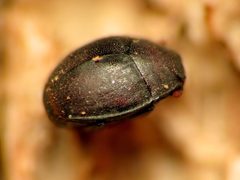
Caerosternus americanus is a small clown beetle ( Histeridae) originally described by LeConte in 1844. It is distributed across eastern and central North America, with records from Canada (Ontario, Quebec) and numerous U.S. states. The belongs to the Tribalinae within the diverse Histeridae, a family commonly known as clown beetles or hister beetles. Like other members of its family, it is likely associated with decaying organic matter, though specific natural history details remain poorly documented.
Pronunciation
How to pronounce Caerosternus americanus: /ˌkaɪəroʊˈstɜrnəs əˌmɛrɪˈkeɪnəs/
These audio files are automatically generated. While they are not always 100% accurate, they are a good starting point.
Images
Distribution
Eastern and central North America. Canadian records: Ontario, Quebec. U.S. records: Alabama, Florida, Georgia, Illinois, Indiana, Maryland, Oklahoma, North Carolina/South Carolina, Texas.
More Details
Taxonomic history
Originally described as Tribalus americanus by LeConte in 1844, later transferred to the Caerosternus. The genus Caerosternus is currently placed in the Tribalinae of the Histeridae.
Sources and further reading
- BugGuide
- GBIF taxonomy match
- iNaturalist taxon
- NCBI Taxonomy
- Catalogue of Life
- Congratulations, UC Davis Linnaean Games Team: National Champs! | Bug Squad
- Oklahoma is More than OK for Burying Beetles
- Bug Eric: A Couple of Weirdos
- Emerald Ash Borer Infestation of White Fringetree Found to be Widespread
- North America’s itsiest bitsiest longhorned beetle | Beetles In The Bush
- Silphidae | Beetles In The Bush