
Hypocaccus fraternus
(Say, 1825)
clown beetle
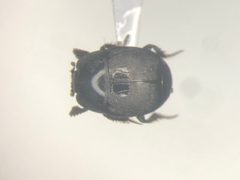
Hypocaccus fraternus is a of clown beetle in the Histeridae, first described by Thomas Say in 1825. It is native to North America with a broad distribution across Canada and the United States. As a member of the Histeridae family, it belongs to a group of beetles commonly associated with decomposing organic matter.
Pronunciation
How to pronounce Hypocaccus fraternus: /haɪpoʊˈkækəs frəˈtɜrnəs/
These audio files are automatically generated. While they are not always 100% accurate, they are a good starting point.
Identification
Hypocaccus fraternus can be distinguished from other Hypocaccus by its North American distribution and the specific morphological characteristics established in Say's original 1825 description. Members of the Hypocaccus are generally small, oval-shaped beetles with clubbed . Accurate species-level identification requires examination of detailed anatomical features, particularly of the genitalia and elytral striation patterns.
Images
Distribution
Canada (Alberta, British Columbia, Manitoba, New Brunswick, Newfoundland and Labrador, Nova Scotia, Ontario, Prince Edward Island, Quebec, Yukon Territory) and the United States (California, Connecticut, Florida, Louisiana, Maine, Missouri, New Hampshire, Rhode Island, and additional states).
Ecological Role
As a member of the Histeridae , this has been observed in association with decomposing organic matter, where it likely contributes to nutrient cycling and serves as a or scavenger in these microhabitats.
Similar Taxa
- Other Hypocaccus speciesMorphologically similar small clown beetles; distinguished by geographic distribution and subtle anatomical differences requiring expert examination.
More Details
Taxonomic history
First described by Thomas Say in 1825, making it one of the earlier described in the Hypocaccus.
Observation frequency
Relatively infrequently recorded, with approximately 20 observations documented on iNaturalist as of the available data.