
Margarinotus merdarius
(Hoffmann, 1803)
clown beetle
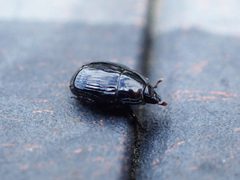
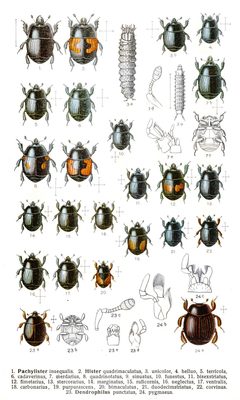
Margarinotus merdarius is a of clown beetle ( Histeridae) originally described from Europe. It has been introduced to North America, where it is now established in Canada and the United States. The species belongs to a known for association with and decaying organic matter.
Pronunciation
How to pronounce Margarinotus merdarius: /mɑrˈɡærɪnoʊtəs mɜrˈdɛəriəs/
These audio files are automatically generated. While they are not always 100% accurate, they are a good starting point.
Images
Habitat
Has been observed in association with and decaying organic matter, consistent with ecological patterns documented for the Margarinotus.
Distribution
Native to Europe, North Africa (Algeria, Morocco, Tunisia), and parts of Western Asia including Iran. Introduced and established in North America: Canada (Alberta, British Columbia, Manitoba, New Brunswick, Nova Scotia, Ontario, Quebec) and USA (California, New Hampshire, Virginia, and additional states).
Human Relevance
Introduced in North America suggest potential role in nutrient cycling in agricultural or pastoral settings, though specific impacts have not been documented.
More Details
Taxonomic authority
Originally described by Hoffmann in 1803, with current generic placement in Margarinotus.
Introduction history
North American records indicate human-mediated introduction, likely through trade or transport of organic materials. Establishment across multiple Canadian provinces and US states suggests successful to introduced range.