
Punicealis munda
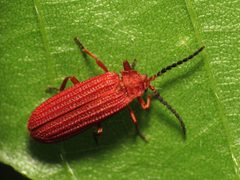
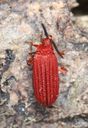
Punicealis munda is a of net-winged beetle in the Lycidae. Members of this family are characterized by soft, flexible with distinct reticulate venation that gives them a net-like appearance. The Punicealis includes species with reddish or purplish coloration. Like other lycids, are likely and may exhibit aposematic coloration warning of chemical defenses.

Pronunciation
How to pronounce Punicealis munda: //ˌpjuː.nɪˈkeɪ.lɪs ˈmʊn.də//
These audio files are automatically generated. While they are not always 100% accurate, they are a good starting point.
Identification
Distinguished from other Lycidae by combination of -level characters including coloration and specific elytral venation patterns. Separation from in Punicealis requires examination of precise coloration, extent of markings, and male genitalia. Distinguished from similarly colored beetles in Cantharidae and Lampyridae by the distinctive net-like venation of —Lycidae have raised longitudinal connected by crossveins creating a reticulate pattern, whereas related soft-bodied beetles lack this venation.
Images
Distribution
Distribution details not documented in available sources; -level distribution insufficient to infer range.
Similar Taxa
- Other Lycidae genera (e.g., Calopteron, Lycus)Share net-veined and soft bodies; distinguished by specific venation patterns, coloration, and body proportions.
- Cantharidae (soldier beetles)Similar soft bodies and coloration; distinguished by lack of reticulate elytral venation— smooth or with simple longitudinal rather than net-like pattern.
- Lampyridae (fireflies)Some share soft bodies and warning coloration; distinguished by different antennal structure and lack of reticulate elytral venation.
More Details
Taxonomic Notes
The Punicealis was established relatively recently in Lycidae , reflecting ongoing revisions within this . Many lycid remain poorly documented in published literature.
iNaturalist Observations
141 observations recorded on iNaturalist as of data retrieval, suggesting the is encountered with moderate frequency by naturalists, though specific details from these observations are not summarized in available sources.