
Pterotus
LeConte, 1859
Species Guides
1- Pterotus obscuripennis(Douglas fir glow-worm)
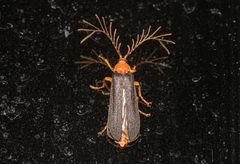
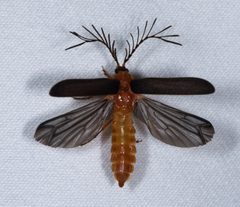
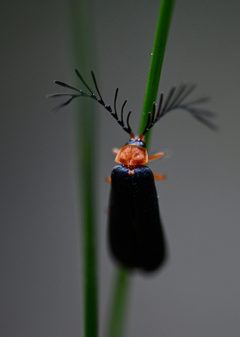
Pterotus is a of fireflies (Lampyridae) and the sole genus in the Pterotinae. It is characterized by distinctive (fan-shaped) with rami longer than the antennomeres. The genus is notable for having females that both glow and emit to attract non- males. Two have been described, though their taxonomic separation remains uncertain.
Pronunciation
How to pronounce Pterotus: /tɛˈroʊtəs/
These audio files are automatically generated. While they are not always 100% accurate, they are a good starting point.
Identification
Distinguished from other firefly by the with rami longer than antennomeres—a trait unique to this genus within Lampyridae. The combination of females with distinguishes it from other firefly genera with larviform females. The Pterotinae contains only this genus, so assignment to subfamily level confirms genus identity.
Images
Appearance
possess with three to ten antennomeres, with rami (branches) extending longer than the antennomeres themselves. Adult females are , retaining a larval-like body form rather than developing typical adult . Males are winged and likely exhibit more conventional adult beetle body plans.
Habitat
Chaparral along the western coast of North America; also occurs in desert environments extending eastward to Jeff Davis County, Texas.
Distribution
Western North America: coastal chaparral from California northward, and desert regions extending east to Texas (Jeff Davis County).
Behavior
females emit both and bioluminescent glows to attract mates. Males are non- and are drawn to female signals. This dual signaling system (chemical and visual) represents an unusual communication strategy among fireflies.
More Details
Taxonomic Uncertainty
Two are currently described in Pterotus, but whether they represent distinct species or variants of a single species remains unresolved.
Systematic Position
Pterotus is the only in the Pterotinae, making it phylogenetically isolated within Lampyridae.