
Isorhipis
Boisduval & Lacordaire, 1835
false click beetles
Species Guides
5- Isorhipis bicolor
- Isorhipis nubila
- Isorhipis obliqua(false click beetle)
- Isorhipis occidentalis
- Isorhipis ruficornis(false click beetle)
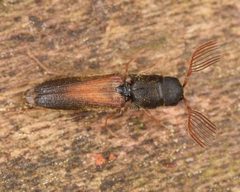
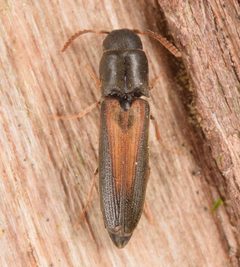
Isorhipis is a of beetles in the Eucnemidae, commonly known as false click beetles. The genus contains at least six described distributed across Europe, Japan, and North America. Recent taxonomic revisions have revealed cryptic diversity within the genus, including the description of new species such as Isorhipis bicolor in 2024. These beetles are part of ongoing research into the classification and diversity of Eucnemidae.
Pronunciation
How to pronounce Isorhipis: /ˌaɪ.soʊˈrɪ.pɪs/
These audio files are automatically generated. While they are not always 100% accurate, they are a good starting point.
Images
Distribution
Europe (including Denmark, Norway, and Sweden), Japan, and North America. Specific distribution records exist for Scandinavian countries (DK, NO, SE).
Human Relevance
Specimens of Isorhipis have contributed to taxonomic revisions of the Eucnemidae. Citizen-collected specimens from Cincinnati, Ohio, were used as in the description of Isorhipis bicolor (2024), demonstrating the role of amateur entomologists in documenting biodiversity.
More Details
Taxonomic Revision Activity
The has been subject to active revision by entomologists including Robert Otto and colleagues, who have used morphological and molecular methods to distinguish cryptic . This work has resulted in the recognition of new species and refined understanding of diversity within the genus.
Species Diversity
Six are currently recognized: Isorhipis bicolor (2024), I. foveata (1955), I. marmottani (1871), I. nubila (1871), I. obliqua (1836), and I. occidentalis (2000). The 2024 description of I. bicolor indicates ongoing discovery of new species even in well-studied regions like eastern North America.