Dixicollis divaricatus
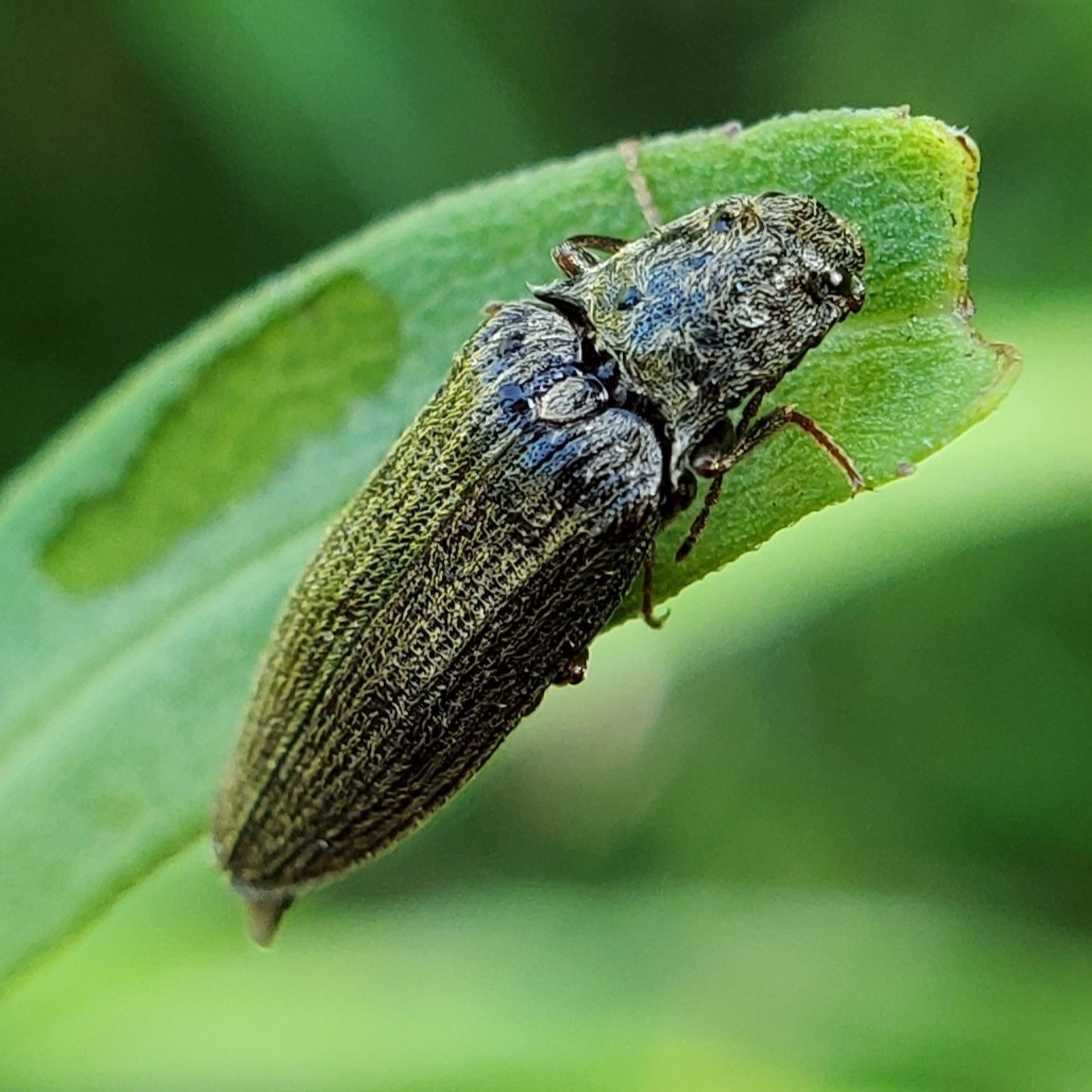
Dixicollis divaricatus is a of click beetle in the Elateridae. The Dixicollis is a small group within this large family of beetles. Based on iNaturalist records, the species has been documented in at least 45 observations. As with other click beetles, it possesses the characteristic prosternal process that enables the 'clicking' mechanism for righting itself when overturned.
Pronunciation
How to pronounce Dixicollis divaricatus: /ˌdɪksɪˈkɒlɪs ˌdɪˌværɪˈkeɪtəs/
These audio files are automatically generated. While they are not always 100% accurate, they are a good starting point.
Identification
Differentiation from other Elateridae requires examination of specific morphological characters including antennal structure, prosternal spine and mesosternal groove configuration, and elytral striation patterns. Distinction from congeneric species would require detailed comparison of genitalic and external structural characters not summarized in general sources.
Images
Appearance
Body form consistent with Elateridae: elongated, somewhat parallel-sided, with hard covering the . Specific coloration, size, and surface sculpturing details are not documented in available sources.
Distribution
Specific geographic range is not documented in available sources. iNaturalist observations suggest presence in regions where the has been recorded, but precise distribution boundaries are unknown.
Behavior
Possesses the click mechanism characteristic of Elateridae: when overturned, the can snap the prosternal spine against the mesosternal groove to produce an audible click and propel itself into the air to right itself.
Similar Taxa
- Other Elateridae generaShare the elongated body form and clicking mechanism; require detailed morphological examination to distinguish at the and level.
- Congeneric species in DixicollisSimilar overall ; -level identification requires examination of fine structural details and potentially genitalia.
More Details
Data limitations
This has limited published documentation. The 45 iNaturalist observations represent the primary accessible occurrence data, but these lack systematic morphological or ecological documentation. Published taxonomic treatments of Dixicollis are sparse in readily accessible literature.
Taxonomic note
The Dixicollis is a relatively small and poorly studied group within the hyperdiverse Elateridae. Its -level may require revision as more material becomes available for study.