
Dolerosomus silaceus
(Say, 1825)
Siliceous Click Beetle
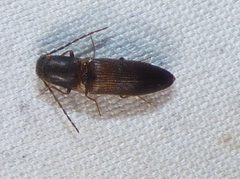
Dolerosomus silaceus is a click beetle in the Elateridae, commonly known as the Siliceous Click Beetle. The was described by Thomas Say in 1825 and is native to northeastern North America. It is a moderately well-documented species with over 300 citizen science observations recorded on iNaturalist.

Pronunciation
How to pronounce Dolerosomus silaceus: //dɒˌlɛroʊˈsoʊməs sɪˈleɪsiəs//
These audio files are automatically generated. While they are not always 100% accurate, they are a good starting point.
Identification
Distinguishing D. silaceus from other Dolerosomus and similar elaterids requires examination of pronotal and elytral proportions, antennal structure, and coloration patterns. The siliceous appearance referenced in its name may aid in field recognition, though definitive identification typically requires reference to specialized keys for North American Elateridae.
Images
Distribution
Recorded from Ontario and Québec in Canada, and Vermont in the United States. The distribution appears centered on the northeastern deciduous forest region of North America.
Behavior
As with other click beetles, possesses the ability to right itself when overturned using the prosternal process and mesosternal groove 'click' mechanism, though this specific has not been independently documented for D. silaceus.
Human Relevance
Documented through citizen science observations, contributing to regional biodiversity records. No known agricultural or economic significance.
Similar Taxa
- Other Dolerosomus speciesMembers of the same share general body plan and require careful examination of specific morphological characters for separation.
- Pale-colored Elateridae in northeastern North AmericaSimilar size and coloration may cause confusion with other such as Agriotes or certain Athous .
More Details
Nomenclature
The authority is given as (Say, 1825), indicating the was originally described in a different and later transferred to Dolerosomus.
Observation record
The has accumulated 318 observations on iNaturalist as of the data retrieval date, suggesting it is not rare within its range, though this may reflect observer effort toward accessible regions.