
Ampedus melanotoides
W.J.Brown, 1933
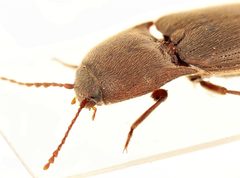
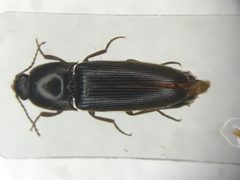
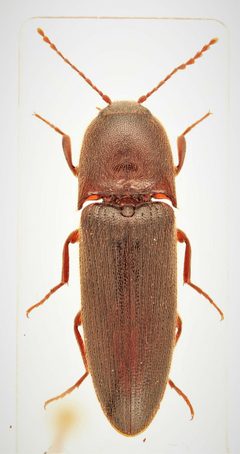
Ampedus melanotoides is a of click beetle in the Elateridae, described by W.J. Brown in 1933. It is known from a limited number of records in eastern Canada. As a member of the Ampedus, it belongs to a group of click beetles often associated with decaying wood and forest . The species remains poorly documented in published literature.
Pronunciation
How to pronounce Ampedus melanotoides: /æmˈpiːdəs mɛˌlænoʊˈtɔɪdiz/
These audio files are automatically generated. While they are not always 100% accurate, they are a good starting point.
Identification
The specific morphological characters distinguishing A. melanotoides from have not been summarized in accessible literature. Members of Ampedus generally exhibit elongated bodies with parallel sides, , and often display contrasting color patterns of black with yellow or orange markings. Accurate identification to level in this typically requires examination of genitalia and comparison with .
Images
Distribution
Recorded from Ontario and Québec, Canada. Distribution appears restricted to eastern North America based on available occurrence data.
Similar Taxa
- Ampedus melanotusClosely related congeneric with similar epithet, potentially confused in historical or specimen records; A. melanotus was described by LeConte in 1853 and has a broader North American distribution
- Other Ampedus speciesThe Ampedus contains numerous with similar body plans and coloration patterns; many require dissection for definitive identification
More Details
Taxonomic note
The was described by William J. Brown in 1933. Brown was a Canadian entomologist who contributed significantly to the of North American Coleoptera, particularly Elateridae and Staphylinidae. The specific epithet 'melanotoides' suggests resemblance to A. melanotus.
Data scarcity
Only 4 observations are documented in iNaturalist, and the lacks a Wikipedia entry. This rarity in public databases suggests either genuine rarity, undercollection, or identification challenges that limit reporting.