
Selonodon
Latreille, 1834
Species Guides
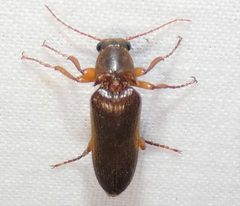
12A of click beetles in the Cebrionidae, comprising 25 recognized distributed primarily in the southern United States. The genus exhibits a trend of phyletic size increase and has been organized into six species groups based on cladistic analysis. Most species were described in a 1995 revision that provided detailed taxonomic and geographic data.
Pronunciation
How to pronounce Selonodon: /sɛləˈnɒdɒn/
These audio files are automatically generated. While they are not always 100% accurate, they are a good starting point.
Identification
Males possess -specific diagnostic characters used in the provided identification key; specific morphological features distinguishing Selonodon from related cebrionid are detailed in the . Species-level identification relies on male genitalia and other structural characters described in the revision.
Images
Distribution
Southern United States, with documented in Georgia, Florida, Texas, Tennessee, Alabama, Mississippi, and Oklahoma. Geographic distribution has been summarized for the , though specific associations are not detailed.
Similar Taxa
- Cebrionidae generaSelonodon is distinguished from other cebrionid by diagnostic characters detailed in the revision; -level placement has been historically unstable with some sources placing it in Elateridae
More Details
Taxonomic History
placement has been disputed; GBIF lists Selonodon as doubtful within Elateridae, while NCBI and the revision source place it in Cebrionidae. The 1995 revision established the modern circumscription of the with 25 in six species groups.
Phylogenetics
Cladistic analysis supports six groups containing 23 species; relationships of two species remain uncertain. A preferred was presented as a phylogenetic hypothesis for the .
Species Diversity
Seventeen were described as new in the 1995 revision, substantially increasing known diversity. Several new specific synonyms were recognized, consolidating previously described .