
Cimberis elongata
(LeConte, 1876)
pine flower snout beetle
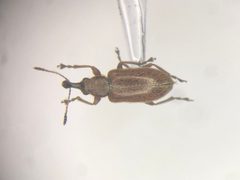
Cimberis elongata is a of pine flower snout beetle in the , a group of primitive weevils. It is found in North America, with records from Canada (British Columbia, Manitoba, New Brunswick) and the United States. The species belongs to a small of pollen-feeding beetles associated with conifers.
Pronunciation
How to pronounce Cimberis elongata: //sɪmˈbɛ.rɪs ɛl.ɒŋˈɡɑː.tə//
These audio files are automatically generated. While they are not always 100% accurate, they are a good starting point.
Identification
Members of the Cimberis can be distinguished from other by their elongated body form and association with pine flowers. The name "elongata" refers to the slender, elongated body shape. Definitive identification requires examination of genitalic structures and comparison with the only other North American species in the genus, Cimberis pilosa.
Images
Habitat
Associated with pine forests; are found on male flowers (catkins) of pine trees (Pinus spp.) where they feed on pollen.
Distribution
North America. Documented from British Columbia, Manitoba, and New Brunswick in Canada; distribution in the United States includes areas where pines occur.
Seasonality
are active during spring when pine catkins are present, typically March to June depending on latitude and elevation.
Diet
Pollen of pine (Pinus) . feed on pollen from male catkins.
Host Associations
- Pinus - pollen source feed on pollen from male catkins
Behavior
are and found on pine catkins during the flowering period. They are pollen feeders rather than leaf feeders or wood borers.
Ecological Role
Pollen feeder; may contribute to pollen distribution among pine trees, though this has not been quantified. Larval is poorly known but likely involves soil or litter association.
Human Relevance
No economic significance; not a pest of forestry or agriculture. Occasionally collected by entomologists studying conifer-associated insects.
Similar Taxa
- Cimberis pilosaThe only other North American in the ; distinguished by differences in and male genitalia
- Nemonyx leconteiAnother North American nemonychid, but with different body proportions and associations
More Details
Taxonomic Note
is considered the most primitive of weevils (Curculionoidea), retaining features such as straight rather than geniculate . Cimberis elongata was described by LeConte in 1876.
Collection Records
As of 2024, iNaturalist records show 67 observations, indicating it is infrequently encountered by naturalists, likely due to its brief seasonal activity period and specific association.