
Synolabus bipustulatus
(Fabricius, 1776)
Red-shouldered Leaf Rolling Weevil, Oak Leafrolling Weevil, Red Spotted Leaf-roller
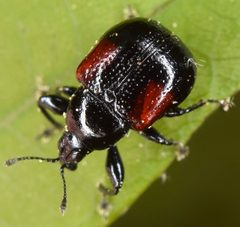
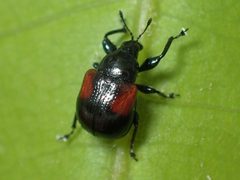
Synolabus bipustulatus is a leaf-rolling weevil in the Attelabidae, commonly known as the red-shouldered leaf rolling weevil or oak leafrolling weevil. The is recognized by its distinctive red shoulder markings. As a member of the Attelabidae, it exhibits the characteristic of cutting and rolling leaves to create protective shelters for its and developing larvae. It has been documented primarily in North America.
Pronunciation
How to pronounce Synolabus bipustulatus: /sɪˈnɒləbəs bɪpʊstəˈleɪtəs/
These audio files are automatically generated. While they are not always 100% accurate, they are a good starting point.
Identification
Distinguished from other Attelabidae by the prominent red or orange shoulder spots. The combination of leaf-rolling and the 'bipustulatus' color pattern separates it from congeneric . Similar leaf-rolling weevils in the lack the distinct red shoulder markings or show different spot placement.
Images
Habitat
Associated with oak trees (Quercus ); found in forested areas and woodlands where oaks occur.
Distribution
North America; documented from the United States including Vermont and surrounding regions. GBIF records indicate presence in North America with specific locality data from Vermont, US.
Diet
and larvae feed on oak leaves; larvae develop within rolled leaf shelters constructed from oak foliage.
Host Associations
- Quercus - plantOak serve as the primary for leaf-rolling and larval development
Life Cycle
Females cut and roll oak leaves to form cylindrical shelters; are deposited within these leaf rolls. Larvae develop inside the protected leaf environment, feeding on the enclosed foliage. occurs within the leaf roll or in soil.
Behavior
Exhibits characteristic leaf-rolling : females cut slits in oak leaves, then roll or fold the leaf into a tight cylinder, securing it with silk or by crimping the edges. This behavior creates a protected microenvironment for deposition and larval development.
Ecological Role
Leaf-rolling modifies oak leaf litter production and may influence local nutrient cycling; serves as a for potential and .
Human Relevance
Minor significance; occasionally noticed in oak woodlands. Not considered an agricultural or forestry pest of major economic concern.
Similar Taxa
- Attelabus nitensSimilar European leaf-rolling weevil in related ; differs in geographic range and lacks the distinctive red shoulder pattern of S. bipustulatus
- Homoeolabus analisAnother North American Attelabidae ; differs in coloration and typically shows different leaf-rolling associations
More Details
Nomenclature Note
The was originally described as Attelabus bipustulatus by Fabricius in 1776 and later transferred to the Synolabus. GBIF currently lists it as a synonym under Attelabus bipustulatus, though modern sources recognize Synolabus as the valid genus.
Observation Data
iNaturalist records indicate 857 observations, suggesting the is moderately well-documented by citizen scientists in its range.