
Gonotropis dorsalis
(Thunberg, 1796)
fungus weevil
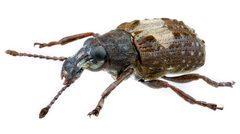
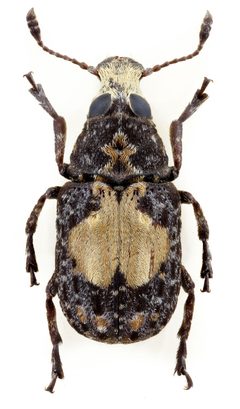
Gonotropis dorsalis is a of fungus weevil in the Anthribidae, characterized by an elongated rostrum typical of weevils. This is associated with fungal substrates, reflecting the ecological habits common to members of its family. It is found in parts of northern Europe including Latvia, Norway, and Sweden.
Pronunciation
How to pronounce Gonotropis dorsalis: //ˌɡoʊnoʊˈtrəʊpɪs ˈdɔːr.sə.lɪs//
These audio files are automatically generated. While they are not always 100% accurate, they are a good starting point.
Identification
Fungus weevils in the Anthribidae can be distinguished from true weevils (Curculionidae) by their straight rather than geniculate (elbowed) , and by the absence of a well-developed scrobe (groove) on the rostrum for receiving the antennae. Specific diagnostic features for G. dorsalis are not documented in available sources.
Images
Habitat
Members of the Anthribidae are typically found in association with fungi, including bracket fungi and decaying wood with fungal growth. The specific microhabitat preferences of G. dorsalis have not been documented.
Distribution
Documented from Latvia, Norway, and Sweden based on GBIF distribution records.
More Details
Taxonomic note
The was originally described as Anthribus dorsalis by Thunberg in 1796, and later transferred to the Gonotropis.
Sources and further reading
- BugGuide
- Wikipedia
- GBIF taxonomy match
- iNaturalist taxon
- NCBI Taxonomy
- Catalogue of Life
- Scorched locust, courtesy of the Locust leafminer, Odontota dorsalis — Bug of the Week
- Scorched locust - Locust leafminer, Odontota dorsalis — Bug of the Week
- Discovery of wasp species previously unknown in the U.S.
- Early Detection, Collaboration Key to Invasive Fruit Fly Eradication in Florida
- How One Entomologist Found Her Calling in Crop Protection