
Sphindidae
Jacquelin du Val, 1860
slime mold beetles, cryptic slime mold beetles
Genus Guides
4- Carinisphindus
- Eurysphindus
- Odontosphindus
- Sphindus(cryptic slime mold beetles)
Pronunciation
How to pronounce Sphindidae: /ˈsfɪndɪˌdeɪ/
These audio files are automatically generated. While they are not always 100% accurate, they are a good starting point.
Identification
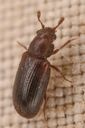
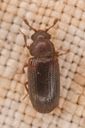
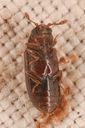
are small beetles (typically 1.5–3.5 mm) with compact, somewhat convex bodies. are 11-segmented with a weakly clubbed or gradually thickened portion. The pronotum often has distinct lateral margins or carinae. are 4-4-4 in most . Identification to genus requires examination of mouthpart structure, particularly the maxillary mala, and male genitalia. They are distinguished from other small cucujoid beetles by the combination of myxomycophagous habits and the structure of the antennal club.
Images
Habitat
are found in moist forest where slime molds grow on decaying wood, leaf litter, and other organic substrates. They are typically collected from rotting logs, stumps, and accumulated forest debris. Specific microhabitat associations vary by ; some inhabit subcortical spaces while others occur in more exposed decaying matter.
Distribution
The has a worldwide distribution with records from North America, Europe, Asia, Africa, and Australia. In Europe, documented from Bulgaria, Denmark, Norway, and Sweden among other countries. Fossil are known from Cretaceous amber deposits in Lebanon, Myanmar (Burmese amber), and Russia (Taimyr amber), indicating an ancient distribution dating to at least the Late Cretaceous (Cenomanian).
Diet
and larvae feed exclusively on slime molds (Myxomycetes), consuming both plasmodial and sporangial stages.
Life Cycle
Larval development occurs within or near slime mold colonies. Larvae are known to feed on myxomycetes, but detailed descriptions of sites and developmental duration are lacking for most .
Behavior
are often found in association with sporulating slime molds. Some have been observed feeding on the spore-bearing structures of myxomycetes. They are generally slow-moving and cryptic in habit, often overlooked due to their small size and concealment within decaying substrates.
Ecological Role
function as specialized consumers of slime molds, potentially influencing myxomycete and spore in forest . Their narrow dietary specialization suggests they occupy a distinct trophic among saproxylic and litter-dwelling beetles.
Human Relevance
No significant economic or medical importance. Occasionally encountered by mycologists and entomologists studying forest decomposition processes. The has received increased attention from paleontologists following discoveries of Cretaceous amber fossils.
Similar Taxa
- NitidulidaeSimilar small size and cucujoid affinities, but Nitidulidae have more strongly clubbed and feed on diverse substrates including fungi, sap, and fermenting plant materials rather than exclusively on slime molds.
- CryptophagidaeSmall beetles associated with fungi, but Cryptophagidae have different antennal structure and feed on a broader range of fungal substrates including molds and mildews, not exclusively myxomycetes.
More Details
Fossil record
The has a significant fossil record with several extinct described from Cretaceous amber. Libanopsinae is an extinct containing Libanopsis from Lebanese amber. Additional fossil genera include Trematosphindus and Burmops from Burmese amber (Late Cretaceous, Cenomanian), and Trematosphindus also occurs in Taimyr amber from Russia. These discoveries have expanded understanding of sphindid evolutionary history and ancient .
Taxonomic history
The classification of has undergone revision, with phylogenetic relationships among analyzed using cladistic methods. The genus Eurysphindus was revised in 1993, leading to the description of the new genus Genisphindus and reassignment of some . The 's placement within the superfamily Nitiduloidea (Cucujoidea) is well established.
Sources and further reading
- BugGuide
- Wikipedia
- GBIF taxonomy match
- iNaturalist taxon
- NCBI Taxonomy
- Catalogue of Life
- New records of myxomycophagous beetle family Sphindidae (Coleoptera: Cucujoidea) from Bulgaria
- A revision of Eurysphindus LeConte (Coleoptera: Cucujoidea: Sphindidae) and a review of sphindid classification and phytogeny