Rhizophagus parallelocollis
Gyllenhal, 1827
graveyard beetle
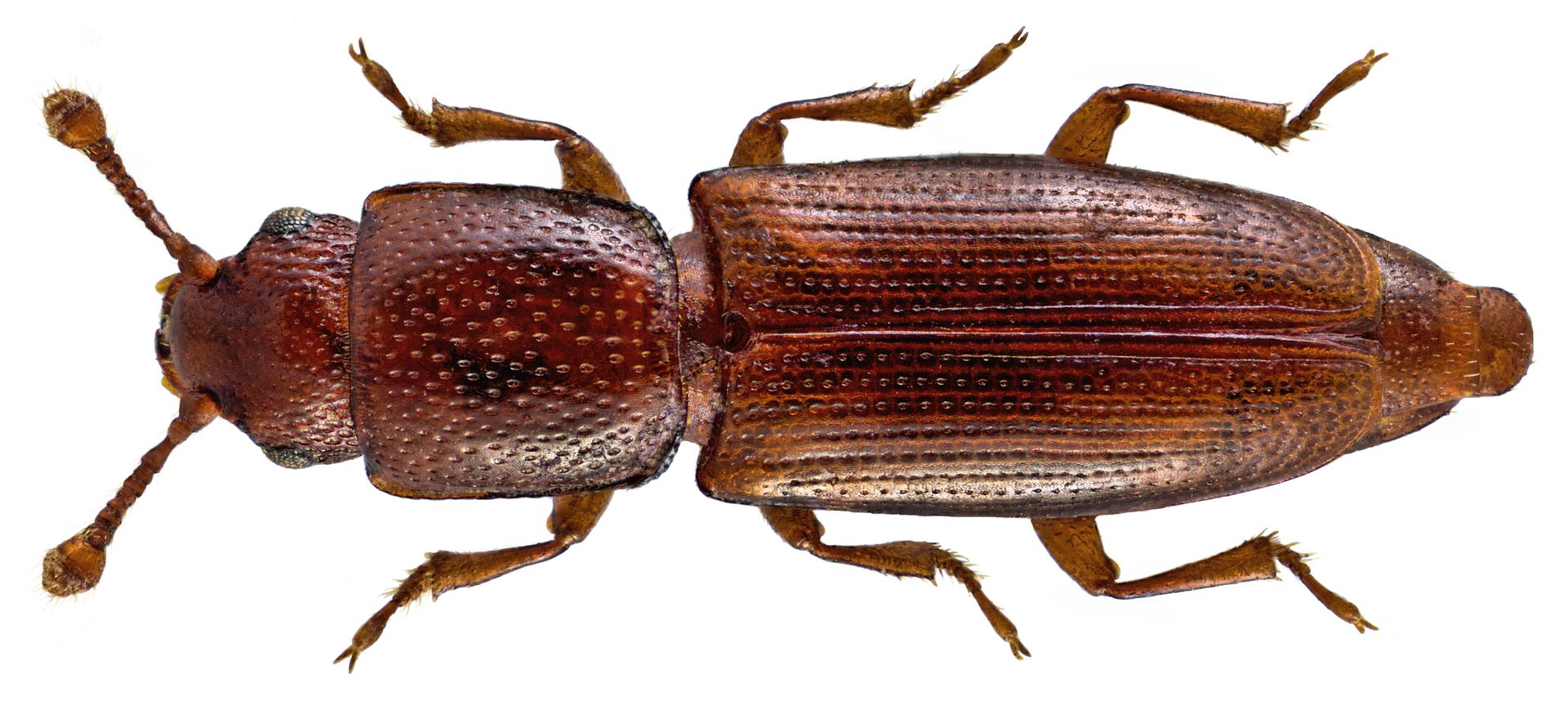
Rhizophagus parallelocollis, commonly known as the graveyard , is a small root-eating beetle in the Monotomidae. It occurs in both North America and Europe. The is characterized by its parallel-sided pronotum, a trait reflected in its specific epithet. Like other members of its , it is associated with subterranean and fungal associations.
Pronunciation
How to pronounce Rhizophagus parallelocollis: /raɪˈzɒfəɡəs ˌpærəˌlɛloʊˈkɒlɪs/
These audio files are automatically generated. While they are not always 100% accurate, they are a good starting point.
Identification
The can be distinguished from by its parallel-sided pronotum (the 'parallelocollis' epithet refers to this feature). Members of the Rhizophagus are small, elongate beetles with clubbed . Specific diagnostic features separating R. parallelocollis from other Rhizophagus species require examination of subtle morphological characters including pronotal shape and elytral punctation patterns.
Images
Habitat
Associated with soil and root environments. The 'graveyard ' suggests occurrence in burial grounds, likely due to soil disturbance and decaying organic matter. Specific microhabitat preferences are poorly documented but inferred from -level associations with subterranean conditions.
Distribution
Recorded from North America and Europe. GBIF distribution records confirm presence in Belgium and North America. The transatlantic distribution pattern suggests either natural range or anthropogenic introduction, though mechanism is unconfirmed.
Diet
Root-eating habits have been reported; specific food sources are not well documented. The Monotomidae is broadly associated with fungal feeding and decaying plant matter, but direct observation of R. parallelocollis feeding is limited.
Ecological Role
As a root-associated , likely contributes to soil nutrient cycling through feeding activities. Potential interactions with soil fungi, given -level tendencies toward mycophagy, though specific ecological functions for this remain undocumented.
Human Relevance
The 'graveyard ' implies historical association with human burial sites. No documented economic importance, pest status, or beneficial applications. The has been recorded in iNaturalist with limited observations (7 records), indicating it is infrequently encountered or underreported.
Similar Taxa
- Other Rhizophagus speciesShare -level characteristics of small size, elongate form, and root-associated habits. Distinguished primarily by pronotal shape and subtle morphological differences requiring close examination.
- Other Monotomidae members share small size, clubbed , and often subterranean or concealed habits. Generic assignment requires detailed morphological study.
More Details
Taxonomic note
The Rhizophagus is taxonomically distinct from the arbuscular mycorrhizal fungus Rhizophagus irregularis (formerly Glomus intraradices), despite the shared genus name. These are unrelated organisms—a genus and a fungal genus—representing a homonymy across kingdoms. The fungus Rhizophagus irregularis is a model organism for plant-fungal research and has been extensively studied, whereas the beetle genus Rhizophagus is comparatively obscure.