
Monotoma americana
Aubé, 1837
root-eating beetle
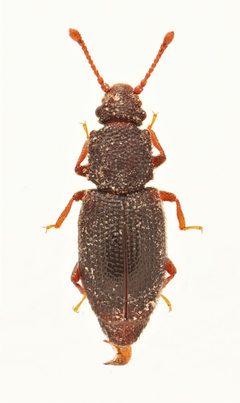
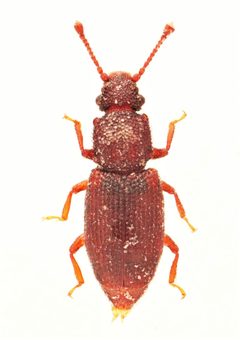
Monotoma americana is a small in the Monotomidae, commonly referred to as root-eating beetles. The species is documented from North America, with records from Canada (Ontario, Québec) and the United States. As a member of Monotomidae, it is associated with feeding on fungal and decaying organic matter, though specific ecological details for this species remain limited.
Pronunciation
How to pronounce Monotoma americana: //ˌmɒnəˈtoʊmə əˌmɛrɪˈkeɪnə//
These audio files are automatically generated. While they are not always 100% accurate, they are a good starting point.
Images
Distribution
North America. Documented from Ontario and Québec in Canada, with broader presence in the United States.
More Details
Taxonomic placement
Monotoma americana was described by Aubé in 1837. The Monotoma is characterized by small size, clubbed , and association with decaying plant material and fungi.
Sources and further reading
- BugGuide
- Wikipedia
- GBIF taxonomy match
- iNaturalist taxon
- Deerly departed: food for flesh-recycling carrion beetles - Margined carrion beetle, Oiceoptoma noveboracense, and American carrion beetle, Necrophila americana — Bug of the Week
- Unwelcome guests in Hawai’i: American cockroach, Periplaneta americana, German cockroach, Blattella germanica, and Western yellowjacket, Vespula pensylvanica — Bug of the Week
- As a Watershed is Urbanized, Damselflies Show Declines
- Silphidae | Beetles In The Bush
- Explorer or Wallflower? Study Shines Light on Cockroach Personalities
- Botanizing at St. Joe State Park | Beetles In The Bush