
Dienerella ruficollis
(Marsham, 1802)
Red-necked plaster beetle
A small in the Latridiidae, commonly known as the red-necked plaster beetle. This is associated with damp, moldy environments and has been introduced to North America from Europe. It is frequently found in buildings and other human-modified where fungal growth occurs.
Pronunciation
How to pronounce Dienerella ruficollis: /ˌdiːnəˈrɛlə ˌruːfɪˈkɔlɪs/
These audio files are automatically generated. While they are not always 100% accurate, they are a good starting point.
Identification
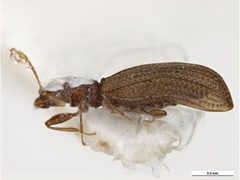
Small , typically 1.5–2.5 mm in length. The specific epithet 'ruficollis' refers to the reddish coloration of the pronotum (neck region), which contrasts with the darker . Members of the Dienerella are distinguished from other Latridiidae by their compact body form and characteristic antennal structure. Separation from other Dienerella requires examination of subtle morphological features including punctation patterns and genitalia.
Images
Habitat
Strongly associated with moist, moldy substrates including plaster, wallpaper, and other building materials with fungal growth. Also found in leaf litter, compost, and other decaying organic matter in outdoor settings. The thrives in humid microhabitats where fungi proliferate.
Distribution
Native to Europe; introduced to North America including Canada (British Columbia, New Brunswick, Newfoundland, Nova Scotia) and the United States. Also recorded from Terceira in the Azores. The distribution pattern indicates human-mediated through global trade and transport.
Diet
Feeds on fungal and spores. As a member of the Latridiidae, this is mycophagous, consuming molds and mildews that grow on damp organic substrates.
Behavior
are active in suitable microhabitats year-round in indoor environments. The readily colonizes new areas with appropriate fungal growth.
Ecological Role
Contributes to decomposition processes by consuming fungal . In indoor environments, serves as an indicator of moisture problems and mold growth. May compete with or prey upon other microfungi-consuming arthropods in its .
Human Relevance
Considered a minor pest in buildings where it indicates excessive moisture and mold problems. The presence of this often signals conditions conducive to structural damage and potential health hazards from mold exposure. Not known to cause direct damage to structures or stored products beyond its association with pre-existing fungal growth.
Similar Taxa
- Dienerella elegansSimilar size and preferences; distinguished by subtle differences in pronotal punctation and coloration.
- Other Latridiidae genera (e.g., Corticaria, Melanophthalma)Shared small size and mycophagous habits; Dienerella distinguished by antennal club structure and body proportions.