
Psyllobora borealis
Casey, 1899
Western Fairy Lady Beetle, western psyllobora lady beetle
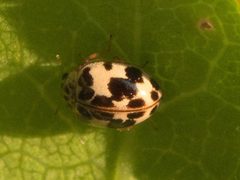
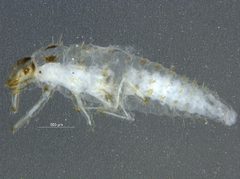
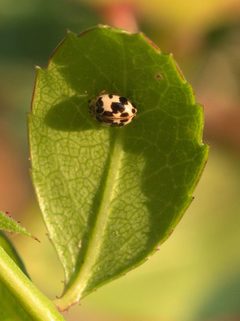
Psyllobora borealis is a small lady beetle in the Coccinellidae, commonly known as the Western Fairy Lady Beetle. measure 2.4–3.1 mm in length. The is distinguished from the similar Psyllobora vigintimaculata by its smaller lateral spot on the , which remains separate from the spot. It is a of powdery mildew fungi.
Pronunciation
How to pronounce Psyllobora borealis: //ˌsɪləˈbɔːrə bɔˈriːəlɪs//
These audio files are automatically generated. While they are not always 100% accurate, they are a good starting point.
Identification
The lateral spot on the is much smaller than in Psyllobora vigintimaculata and always remains separate from the spot, never merging with it. This spot separation is the primary diagnostic feature distinguishing the two .
Images
Appearance
are 2.4–3.1 mm in length. The bear dark splotches on a lighter background. The pronotum displays lighter splotches. The lateral spot on each elytron is notably small and does not connect to the spot.
Distribution
Recorded from western North America: Montana to New Mexico, westward to southern British Columbia and southern California.
Diet
Powdery mildew fungi.
Similar Taxa
- Psyllobora vigintimaculataDistinguished by P. borealis having a much smaller lateral spot on the that always remains separate from the spot; in P. vigintimaculata the lateral spot is larger and may connect to the median spot.
More Details
Taxonomic note
The was described by Casey in 1899. The Psyllobora contains species specialized in feeding on powdery mildew fungi, an unusual diet among Coccinellidae.
Sources and further reading
- BugGuide
- Wikipedia
- GBIF taxonomy match
- iNaturalist taxon
- NCBI Taxonomy
- Bugs for All, All for Bugs | Bug Squad
- Grasshoppers of Wyoming and the West
- Grasshoppers of Colorado
- Grasshoppers of Colorado
- Zombie bees, Apis mellifera, and their tormentor the humpbacked fly, Apocephalus borealis — Bug of the Week
- Did One Praying Mantis Give Rise to an All-Female Species?