
Ceratomegilla
Crotch, 1873
Species Guides
1- Ceratomegilla ulkei(Ulke's Boreal Ladybeetle)
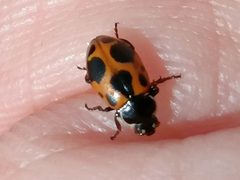
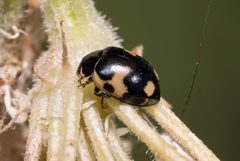
Ceratomegilla is a of lady beetles (Coccinellidae) containing approximately eight to thirteen described . The genus is best known through the well-studied species Ceratomegilla undecimnotata, a common aphidophagous used in programs against pests in agricultural systems. Species in this genus exhibit predatory targeting small aphid species, with documented effectiveness as biocontrol agents in peach orchards, tobacco, cotton, and maize fields.
Pronunciation
How to pronounce Ceratomegilla: //ˌsɛrətoʊˈmɛɡɪlə//
These audio files are automatically generated. While they are not always 100% accurate, they are a good starting point.
Images
Distribution
-level distribution records from GBIF indicate presence in Norway (NO) and Sweden (SE). -level records for Ceratomegilla undecimnotata document occurrence in Greece, where it is reported as one of the most common ladybird species, found in peach orchards, tobacco fields, cotton, and maize.
Ecological Role
Members of this function as aphidophagous in agricultural and natural . Ceratomegilla undecimnotata serves as an important agent against pests, suppressing of Myzus persicae, Aphis fabae, and related in programs.
Human Relevance
Ceratomegilla undecimnotata is utilized as a biocontrol agent in agricultural pest management, particularly for control in peach orchards, tobacco, cotton, and maize production. The has been extensively studied for its sensitivity to , with research demonstrating that sublethal doses of imidacloprid and deltamethrin negatively affect survival, development, , and growth parameters. This research informs strategies to minimize harm to natural enemies when chemical control is necessary.
Sources and further reading
- BugGuide
- Wikipedia
- GBIF taxonomy match
- iNaturalist taxon
- NCBI Taxonomy
- Toxicity, Sublethal and Low Dose Effects of Imidacloprid and Deltamethrin on the Aphidophagous Predator Ceratomegilla undecimnotata (Coleoptera: Coccinellidae)
- Development, growth, feeding and reproduction of Ceratomegilla undecimnotata, Hippodamia variegata and Coccinella septempunctata fed on the tobacco aphid, Myzus persicae nicotianae
- Effect of temperature on development, growth, and predation of Ceratomegilla undecimnotata (Schneider) (Coleoptera: Coccinellidae) feeding on the black bean aphid, Aphis fabae (Scopoli, 1763) (Hemiptera: Aphididae)