
Exochomus metallicus
Korschefsky, 1935
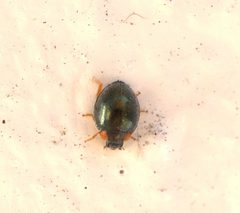
Exochomus metallicus is a small lady beetle in the Coccinellidae. measure 3–4.5 mm in length and display distinctive metallic green coloration with yellow markings on the pronotum. The is native to Africa and has been introduced to North America, with established recorded in California. Specific details regarding its , , and remain poorly documented in published literature.
Pronunciation
How to pronounce Exochomus metallicus: //ɛk.səˈkoʊ.məs mɛˈtæl.ɪ.kəs//
These audio files are automatically generated. While they are not always 100% accurate, they are a good starting point.
Identification
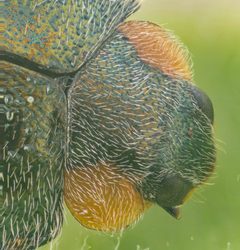
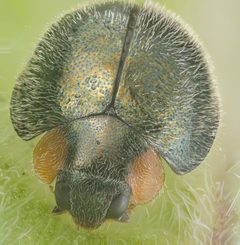
The combination of small size (3–4.5 mm), metallic green body coloration, and yellow lateral pronotal markings distinguishes Exochomus metallicus from most other North American Coccinellidae. The yellow pronotal pattern is particularly distinctive: it occupies the lateral one-third to five-sixths of the pronotum, leaving the central portion green. This contrasts with many native Exochomus and other small lady beetles that typically show different color patterns or lack metallic green coloration.
Images
Appearance
are 3–4.5 mm in length. The body is predominantly metallic green. The lateral one-third to five-sixths of the pronotum is yellow, creating a contrasting color pattern against the green and central pronotum.
Distribution
Native to Africa. Introduced to North America, with records from California in the United States. The has established in the introduced range.
Human Relevance
Introduced to North America, likely as a agent, though specific target pests and efficacy have not been documented in the provided sources.
Similar Taxa
- Other Exochomus speciesSimilar small size and body shape, but native North American typically lack the specific combination of metallic green coloration with yellow lateral pronotal markings seen in E. metallicus.
- General small metallic CoccinellidaeMany small lady beetles show metallic coloration, but the distinct yellow lateral pronotal pattern of E. metallicus is not commonly found in other .
More Details
Introduction history
The has been introduced to North America from Africa, but the date, mechanism, and purpose of introduction are not specified in available sources. California represents the only confirmed North American location in published records.