
Collops bipunctatus
(Say, 1823)
Two-Spotted Melyrid
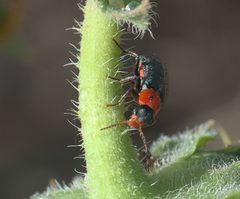
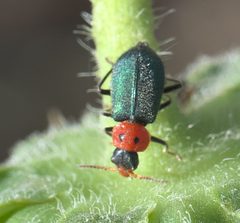
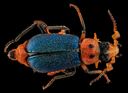
Collops bipunctatus, commonly known as the two-spotted melyrid, is a of soft-winged flower beetle in the Melyridae. It is found mainly in North America, with confirmed records from Canada (Alberta and Saskatchewan) and the United States. The species is one of approximately 1,000 species in the family Melyridae, which are characterized by soft, flexible .
Pronunciation
How to pronounce Collops bipunctatus: /ˈkɒləps ˌbaɪpʌŋkˈteɪtəs/
These audio files are automatically generated. While they are not always 100% accurate, they are a good starting point.
Images
Distribution
North America, with confirmed records from Alberta and Saskatchewan in Canada. The occurs across the continent, though specific range boundaries within the United States are not well documented in available sources.
More Details
Sources and further reading
- BugGuide
- Wikipedia
- GBIF taxonomy match
- iNaturalist taxon
- NCBI Taxonomy
- Meloidae Holdings | Entomology Research Museum
- Managing Cotton Insects in Texas - AgriLife Extension Entomology
- Bug Eric: Wasp Wednesday: Mellinus
- Bug Eric: Sunflower Extravaganza
- Researchers Share New Method for Detecting Insect Egg Predators
- Oecanthidae | Beetles In The Bush