
Neolochmaea
Laboissière, 1939
Species Guides
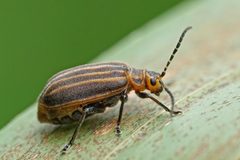
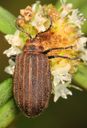
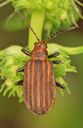
1Neolochmaea is a of skeletonizing leaf beetles in the Chrysomelidae, established by Laboissière in 1939. The genus contains three described : N. brevicornis, N. guerini, and N. obliterata. These beetles are restricted to the Neotropical region. The genus belongs to the tribe Alticini, commonly known as flea beetles, though specific behavioral traits of this genus remain poorly documented.
Pronunciation
How to pronounce Neolochmaea: /ˌniː.oʊ.lɒkˈmiː.ə/
These audio files are automatically generated. While they are not always 100% accurate, they are a good starting point.
Identification
Members of Neolochmaea can be distinguished from related by their skeletonizing feeding habit on leaves, leaving characteristic lace-like damage. The three differ in subtle morphological features, particularly antennal length (N. brevicornis has notably short ) and elytral patterning (N. obliterata shows reduced or obscured markings). As a genus within Alticini, they likely possess the enlarged hind typical of flea beetles, enabling jumping, though this trait has not been explicitly documented for Neolochmaea specifically.
Images
Distribution
Neotropical region. Specific country records are not comprehensively documented, but the occurs broadly across tropical and subtropical areas of the Americas.
Similar Taxa
- Other Alticini generaMany flea beetle share skeletonizing leaf-feeding habits and similar body plans. Neolochmaea is distinguished by specific combinations of antennal, pronotal, and male genitalic characters used in taxonomic keys, though these require expert examination.
- LochmaeaThe similar name reflects historical taxonomic relationships. Neolochmaea was separated from Lochmaea based on differences in tarsal structure and other subtle morphological features; they occur in different geographic regions (Neolochmaea in the Neotropics, Lochmaea primarily in the Palearctic).
More Details
Taxonomic history
The was established by Laboissière in 1939. have been transferred in from other genera over time; N. obliterata was originally described in the genus Altica by Olivier in 1808, and N. brevicornis was originally described in the genus Crepidodera by Weise in 1921.
Observation data
iNaturalist records indicate 964 observations, suggesting the is moderately well-encountered by naturalists, though many may not be identified to level due to the need for examination.