
Erynephala
Blake, 1936
beet leaf beetle
Species Guides
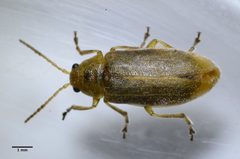
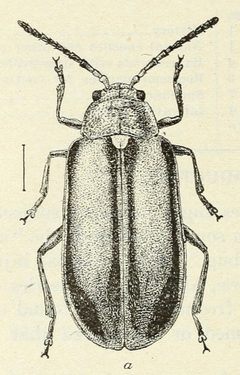
4Erynephala is a of skeletonizing leaf beetles in the Chrysomelidae, comprising six described . The genus was established by Blake in 1936 and is distributed across North America and the Neotropics. The most well-known species, Erynephala puncticollis, is commonly called the beet and has been documented feeding on saline-tolerant plants in dry alkaline .
Pronunciation
How to pronounce Erynephala: /ɛrɪˈnɛfələ/
These audio files are automatically generated. While they are not always 100% accurate, they are a good starting point.
Identification
Erynephala are distinguished from other alticine leaf beetles by their skeletonizing feeding habit, which produces characteristic lace-like damage to leaves. The can be separated from similar genera by examination of male genitalia and specific elytral punctation patterns, though detailed diagnostic features require taxonomic study. Erynephala puncticollis is recognized by its association with Chenopodiaceae plants in saline environments.
Images
Habitat
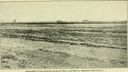
in this occupy diverse including pinyon-oak-juniper woodland, mesquite-saltbush chaparral, sand dune systems, and dry alkaline lakebeds. Erynephala puncticollis has been specifically documented in dry alkaline lakebeds feeding on iodine bush (Allenrolfea occidentalis).
Distribution
The is found in North America and the Neotropics. occur across the western and southwestern United States, with documented records from New Mexico, Oklahoma, and surrounding regions.
Seasonality
activity has been observed in late spring, with records from May in New Mexico. Specific seasonal patterns for most remain undocumented.
Diet
Erynephala are skeletonizing leaf beetles that feed on foliage. Erynephala puncticollis has been observed feeding on Allenrolfea occidentalis (iodine bush), a succulent halophytic shrub in the Amaranthaceae.
Host Associations
- Allenrolfea occidentalis - food plantObserved feeding on fleshy, succulent foliage in dry alkaline lakebed
Behavior
are and active on vegetation. The skeletonizing feeding produces characteristic damage patterns on leaves. Erynephala puncticollis has been observed in dry alkaline lakebeds during late afternoon.
Ecological Role
As primary consumers, these beetles contribute to nutrient cycling in arid and semi-arid . Their association with halophytic plants suggests a specialized role in saline .
Human Relevance
Erynephala puncticollis, the beet , is an agricultural pest of beet crops, though the extent of economic damage has not been quantified in the provided sources.
Similar Taxa
- other Galerucinae generaSimilar skeletonizing feeding habits, but distinguished by genitalia and punctation patterns
- other AlticiniShare flea beetle characteristics including enlarged hind , but differ in specific morphological details and associations
More Details
Species diversity
The contains six described : E. glabra, E. interrupta, E. maritima (synonym E. brighti), E. morosa, E. puncticollis, and E. texana
Taxonomic history
Erynephala maritima was described by J. L. LeConte in 1865, with E. brighti Blake, 1970 later synonymized under this name