
Acallepitrix
J. Bechyné, 1956
flea beetles
Species Guides
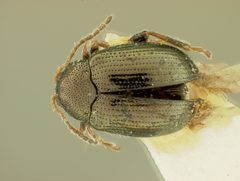
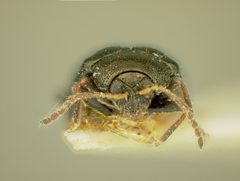
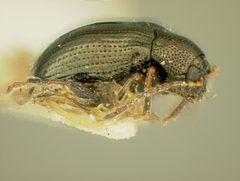
1Acallepitrix is a of flea beetles ( Alticinae) in the leaf beetle Chrysomelidae, established by J. Bechyné in 1956. The genus contains more than 20 described distributed across the Neotropics, Central America, and North America. At least one undescribed species has been studied as a candidate agent for Solanum weeds.
Pronunciation
How to pronounce Acallepitrix: /ˌækəˈlɛpɪtrɪks/
These audio files are automatically generated. While they are not always 100% accurate, they are a good starting point.
Images
Habitat
High-rainfall regions; at least one associated with Solanum plants in Brazil.
Distribution
Native to the Neotropics, Central America, and North America. At least one undescribed species native to Brazil.
Diet
Phytophagous; at least one feeds on Solanum species (Solanaceae).
Host Associations
- Solanum mauritianum - preferred for candidate biocontrol agent
- Solanum melongena - sustained feeding and oviposition in no-choice tests, but inferior
Life Cycle
Larval development occurs in leaf mines; at least one exhibits leaf-mining .
Behavior
At least one undescribed species shows significant feeding and oviposition preferences for Solanum mauritianum in paired choice tests.
Ecological Role
At least one has been evaluated as a candidate agent for Solanum mauritianum.
Human Relevance
One undescribed species was imported to South Africa in 1997 for testing as a potential biocontrol agent for Solanum mauritianum; release was not approved due to ambiguous -specificity results and potential risk to cultivated eggplant.
More Details
Taxonomic status
The was established by J. Bechyné in 1956. GBIF lists 59 , though Wikipedia and other sources cite 'more than 20 described species', suggesting taxonomic uncertainty or recent revisions.
Biocontrol research context
An undescribed species ('Acallepitrix sp. nov.') from Brazil was studied extensively in South African facilities. No-choice tests showed plants confined to Solanum, but several non-target sustained feeding, oviposition, and larval development. Risk to eggplant was assessed as relatively low but not zero. Release was not approved pending additional field surveys and open-field trials in Brazil.