
Cryptocephalus notatus
Fabricius, 1787
Red-marked Leaf Beetle
Species Guides
3Cryptocephalus notatus is a case-bearing leaf beetle in the Chrysomelidae, commonly known as the Red-marked . The is native to North America and has been recorded across multiple Canadian provinces and the United States. It belongs to a whose larvae construct portable cases from fecal material and shed .
Pronunciation
How to pronounce Cryptocephalus notatus: /ˌkrɪptoʊˈsɛfələs noʊˈteɪtəs/
These audio files are automatically generated. While they are not always 100% accurate, they are a good starting point.
Identification
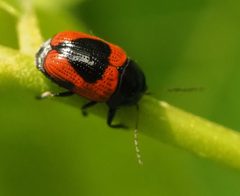
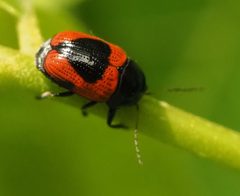
As a member of the Cryptocephalus, likely exhibit the characteristic compact, rounded body form typical of case-bearing leaf beetles. The specific epithet "notatus" (meaning marked or spotted) suggests distinctive markings may be present, though detailed diagnostic features for separating this from are not documented in available sources.
Images
Distribution
Recorded from North America, with confirmed presence in the Canadian provinces of Alberta, British Columbia, and Manitoba. The ' range extends throughout the continent per broader North American distribution records.
Life Cycle
Larvae of Cryptocephalus construct portable cases from their own combined with shed , carrying these protective coverings as they feed and move. Specific developmental details for C. notatus have not been documented.
Similar Taxa
- Other Cryptocephalus speciesNumerous occur in North America; accurate identification to level typically requires examination of subtle morphological characters including genitalia.
More Details
Subspecies
Three are recognized: Cryptocephalus notatus fulvipennis, Cryptocephalus notatus notatus, and Cryptocephalus notatus sellatus Schaeffer, 1933.
Taxonomic Authority
The was first described by Johan Christian Fabricius in 1787, a prominent Danish entomologist of the late 18th century.