
Stenopodius
Horn, 1883
Species Guides
4- Stenopodius flavidus
- Stenopodius lateralis(Lateral Tortoise Beetle)
- Stenopodius martini
- Stenopodius texanus
Stenopodius is a of leaf beetles in the Chrysomelidae, Cassidinae, containing approximately seven described . The genus was established by Horn in 1883 and is classified within the tribe Chalepini. Species in this genus are distributed in western and southwestern North America, including California, Texas, and insular regions. Members are hispine-type beetles, characterized by spiny or modified body forms associated with leaf-feeding habits.
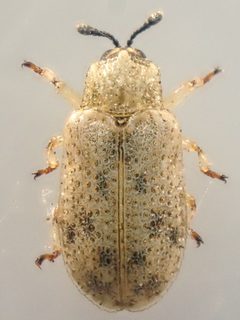
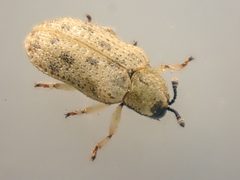
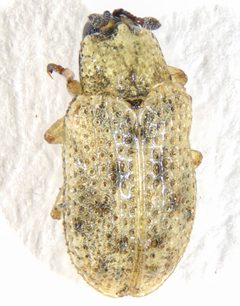
Pronunciation
How to pronounce Stenopodius: /ˌstɛnəˈpoʊdiəs/
These audio files are automatically generated. While they are not always 100% accurate, they are a good starting point.
Images
Distribution
Western and southwestern North America. Documented from California (including Inyo County), Texas, and insular localities. Specific distributions vary by : S. texanus occurs in Texas, S. insularis and S. martini are associated with island or coastal regions, and S. inyoensis is documented from Inyo County, California.
More Details
Species Diversity
The contains seven described : Stenopodius flavidus Horn, 1883 (type species), S. insularis Blaisdell, 1939, S. inyoensis Blaisdell, 1939, S. lateralis (Schaeffer, 1933), S. martini Blaisdell, 1939, S. submaculatus Blaisdell, 1939, and S. texanus Schaeffer, 1933. Five of these were described by Blaisdell in 1939, indicating a concentrated period of taxonomic description.
Taxonomic Position
Stenopodius belongs to the tribe Chalepini within the Cassidinae. This tribe includes hispine beetles, which typically possess spiny or elaborately modified body forms and are associated with feeding on monocotyledonous plants, particularly grasses and palms.