
Lutrochidae
Kasap & Crowson, 1975
Travertine Beetles
Genus Guides
1- Lutrochus(travertine beetles)
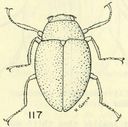
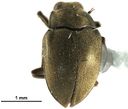
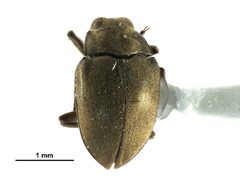
is a small of aquatic beetles commonly known as travertine beetles. The family has been reported from hygropetric for the first time in Venezuela, expanding beyond their previously known association with travertine-depositing springs and streams in North America. occur in the Americas from the United States through the Neotropics, with recent revisions documenting new species from Venezuela, the Guianas, and the Lesser Antilles.
Pronunciation
How to pronounce Lutrochidae: //luːˈtrɒkɪdiː//
These audio files are automatically generated. While they are not always 100% accurate, they are a good starting point.
Identification
can be distinguished from other riffle beetle (Dryopidae, Elmidae, Psephenidae) by their association with travertine-depositing and specific morphological features of the genitalia, which are illustrated in taxonomic revisions. The family is placed in the superfamily Dryopoidea within Elateriformia.
Images
Habitat
Hygropetric ; travertine-depositing springs and streams; wave-swept lake margins; spring-ponds. The was first reported from hygropetric habitats in Venezuela, expanding the known habitat range beyond North American travertine systems.
Distribution
Americas: United States (Wisconsin, Kansas), Venezuela, French Guiana, Guyana, Suriname, Grenada, Colombia.
Similar Taxa
- DryopidaeBoth are riffle beetle in Dryopoidea; Dryopidae are generally more widespread and not specifically associated with travertine deposits
- ElmidaeBoth are riffle beetle often collected together; Elmidae are more diverse and lack the specific travertine association of
- PsephenidaeBoth are aquatic in riffle ; Psephenidae have distinctively different larval (water pennies)
More Details
Taxonomic history
The was established by Kasap & Crowson in 1975. Recent revisions have significantly expanded the known , with six new described from Venezuela in 2013 and four new species from the Guianas and Lesser Antilles in 2014.
Habitat discovery
The 2013 Venezuelan revision represents the first documented report of the from hygropetric —thin films of water flowing over rock surfaces—marking an expansion from the previously known association with travertine-depositing systems.
Sources and further reading
- BugGuide
- GBIF taxonomy match
- iNaturalist taxon
- NCBI Taxonomy
- Catalogue of Life
- A revision of the Lutrochidae (Coleoptera) of Venezuela, with description of six new species
- Riffle Beetles of Wisconsin (Coleoptera: Dryopidae, Elmidae, Lutrochidae, Psephenidae) With Notes on Distribution, Habitat, and Identification
- Review of the Lutrochidae (Coleoptera) of the Guianas and Lesser Antilles, with description of four new species
- Rediscovery ofLutrochus laticepsCasey, 1893 (Coleoptera: Lutrochidae) and the Discovery ofDineutus productusRoberts, 1895 andDineutus serrulatus analisRégimbart, 1882 (Coleoptera: Gyrinidae) in Kansas, USA, with Notes on Habitat Preference