
Chelonariidae
Blanchard, 1845
turtle beetles
Genus Guides
1- Chelonarium(turtle beetles)
, commonly known as turtle beetles, is a small of beetles in the superfamily Byrrhoidea. The family contains approximately 300 described across three extant : Chelonarium, Brounia, and Pseudochelonarium. Members are characterized by heavily sclerotized and a remarkable ability to retract their limbs into socket-like body cavities. Their remains poorly understood, though associations with orchid roots and the nests of ants and have been reported.
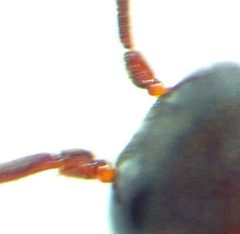
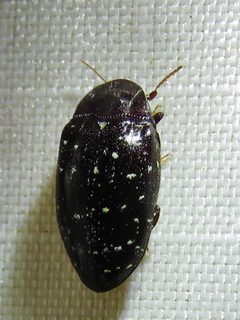
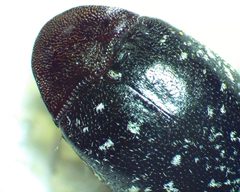
Pronunciation
How to pronounce Chelonariidae: //ˌkɛloʊnəˈri.aɪdiː//
These audio files are automatically generated. While they are not always 100% accurate, they are a good starting point.
Identification
The combination of a heavily armored, seed-shaped body with the ability to retract limbs into socket-like cavities distinguishes from other Byrrhoidea . The overall turtle-like appearance when limbs are withdrawn is diagnostic. Specimens may be confused with certain water penny beetles (Psephenidae) or other dryopoid beetles, but the specific limb retraction mechanism and body proportions are unique to this family.
Images
Habitat
Modern are associated with warm, humid environments. Reported ecological associations include the roots of orchids and the nests of ants and . The is considered thermophilous based on modern distribution patterns.
Distribution
The has a disjunct distribution across multiple regions. Chelonarium occurs in the Americas, Asia, and Australia, with fossil known from European Baltic amber. Brounia is restricted to New Zealand. Pseudochelonarium is found in South and Southeast Asia and New Guinea. Fossil records include Eocene Baltic amber (Kaliningrad Region, western Russia), Eocene Florissant Formation (USA), and Lower Cretaceous Lebanese amber.
Host Associations
- orchids - association with rootsModern suggest larval association with epiphytic orchids; inferred from modern , not directly observed in fossils
- ants - nest associationReported from nests, specific nature of relationship unclear
- termites - nest associationReported from nests, specific nature of relationship unclear
Behavior
An unusual righting has been described in Chelonarium lecontei, though details are not available from the abstract. The limb retraction capability likely serves a defensive function.
Similar Taxa
- Psephenidae (water penny beetles)Similar compact, rounded body form; distinguished by 's unique limb retraction mechanism and socket-like cavities
- Other Dryopoidea familiesSuperficial similarity in general body plan; distinguished by heavily sclerotized and seed-shaped body with limb retraction capability
More Details
Fossil Record
are rarely represented in the fossil record. The first formally described from Eocene Baltic amber, Chelonarium andabata and Chelonarium dingansich, were described in 2021 using X-ray micro-computed tomography. These represent the first known European representatives of the . The Eocene Florissant Formation fossil Chelonarium montanum has been reclassified as incertae sedis within Byrrhoidea.
Taxonomic History
The was established by Blanchard in 1845. The Eochelonarium from Lower Cretaceous Lebanese amber is extinct.
Sources and further reading
- BugGuide
- Wikipedia
- GBIF taxonomy match
- iNaturalist taxon
- NCBI Taxonomy
- Catalogue of Life
- New Distributional Record for Chelonarium lecontei Thomson (Coleoptera: Chelonariidae)
- Notes on Chelonarium lecontei Thomson (Coleoptera: Chelonariidae), including Description of an Unusual Righting Behavior
- The first described turtle beetles from Eocene Baltic amber, with notes on fossil Chelonariidae (Coleoptera: Byrrhoidea)
- Redescription of Chelonarium signatum Dalman, 1824, with Notes on its Reproductive Biology and Occurrence in Paraguay (Coleoptera: Byrrhoidea: Chelonariidae)
- A Distributional Checklist of North American Genera of Aquatic Dryopoid and Dascilloid Beetles (Elmidae, Dryopidae, Limnichidae, Chelonariidae, Heteroceridae, Psephenidae, Ptilodactylidae, Cyphonidae, Georyssidae)