
Agrilus lacustris
LeConte, 1860
Croton Agrilus
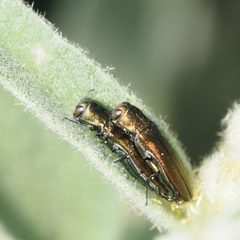
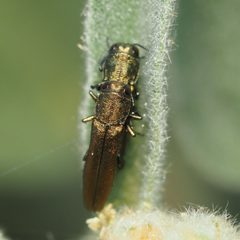
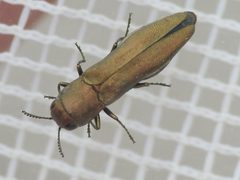
Agrilus lacustris is a of metallic wood-boring beetle in the Buprestidae, found in North America. The species is strongly associated with Croton pottsii (leatherweed), on whose foliage have been observed. It was described by LeConte in 1860. The "Croton Agrilus" reflects this plant relationship.
Pronunciation
How to pronounce Agrilus lacustris: /ˈæɡrɪləs læˈkʌstrɪs/
These audio files are automatically generated. While they are not always 100% accurate, they are a good starting point.
Identification
can be found sitting on the foliage of Croton pottsii (leatherweed). The may be distinguished from other Agrilus species by its specific association with this plant and geographic distribution in North America, though detailed morphological distinguishing features require examination.
Images
Habitat
Associated with areas supporting Croton pottsii (leatherweed), which grows in dry, sandy or rocky soils. The specific type is not well documented beyond plant association.
Distribution
North America. Records include Ontario, Canada and the United States. Specific U.S. state records include Texas, where it has been collected in the Monahans Sandhills area.
Seasonality
have been observed in late May. Specific is not well documented.
Diet
Larval development likely occurs in woody plants, though the specific larval host is not confirmed. have been observed on foliage of Croton pottsii (leatherweed), suggesting possible feeding on this plant.
Host Associations
- Croton pottsii - plant observed sitting on foliage; 'Croton Agrilus' derives from this association
Behavior
have been observed sitting on foliage of plants. No other specific are documented.
Similar Taxa
- Agrilus obtususAlso associated with Crotonaceae (Senna roemeriana), but distinguished by different host plant and morphological features
More Details
Etymology
The specific epithet 'lacustris' (meaning 'of lakes') appears incongruous with the ' occurrence in dry ; the origin of this name choice by LeConte is not documented in available sources.
Collection method
Has been successfully collected by visual searching and netting from plant foliage rather than beating or sweeping techniques.