
Gibbium aequinoctiale
Boieldieu, 1854
smooth spider beetle
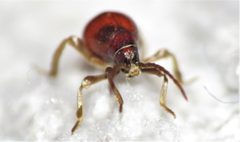
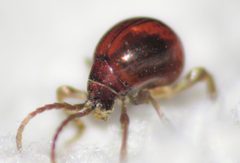
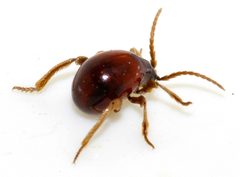
Gibbium aequinoctiale, commonly known as the smooth , is a small in the Ptinidae ( Ptininae). It has a pantropical distribution spanning the Caribbean, Central and South America, Europe, and parts of Asia. The feeds primarily on dead organic materials and is frequently associated with stored products and warm, humid environments. It is morphologically similar to G. psylloides, from which it can be distinguished by pronotal shape and elytral punctation.
Pronunciation
How to pronounce Gibbium aequinoctiale: /ˈɡɪbi.əm eːkwɪnɔkˈti.aːle/
These audio files are automatically generated. While they are not always 100% accurate, they are a good starting point.
Identification
Distinguished from the closely related G. psylloides by: pronotum broader than long with distinct basal constriction (vs. more parallel-sided in G. psylloides); elytral punctation finer and more regular; male genitalia with characteristic paramere structure. The smooth, highly polished contrast with the more matte appearance of some related ptinids.
Images
Habitat
Warm, humid environments; frequently found in stored product facilities, warehouses, and domestic settings. Associated with decaying organic matter in tropical and subtropical regions.
Distribution
Pantropical and subtropical distribution: Caribbean, Central America, South America, Europe, and Northern Asia (excluding China). Widely distributed through human commerce.
Diet
Feeds principally on a wide variety of dead organic materials, including stored food products, dried plant material, and decaying matter.
Ecological Role
Decomposer; contributes to breakdown of dead organic matter in warm, humid environments.
Human Relevance
Pest of stored products; infests warehouses, granaries, and domestic food storage. Frequently transported globally through commerce, leading to widespread establishment outside native range.
Similar Taxa
- Gibbium psylloidesMorphologically similar; distinguished by pronotal shape, elytral punctation, and male genitalia structure. Frequently confused historically, with G. aequinoctiale often reported under the name G. psylloides.
Misconceptions
Historically reported under the name Gibbium psylloides (Czenpinski), leading to confusion in distribution records. The two are now recognized as distinct based on morphological characters.
Sources and further reading
- BugGuide
- Wikipedia
- GBIF taxonomy match
- iNaturalist taxon
- NCBI Taxonomy
- Brazil Bugs #12 – Desafio de identificação #5 | Beetles In The Bush
- Identification and geographical distribution of Gibbium aequinoctiale Boieldieu and Gibbium psylloides (Czenpinski) (Coleoptera: Ptinidae)
- Phylogenetic Analyses of Bostrichiformia and Characterization of the Mitogenome of Gibbium aequinoctiale (Bostrichiformia Ptinidae).