Attagenus brunneus
Faldermann, 1835
carpet beetle
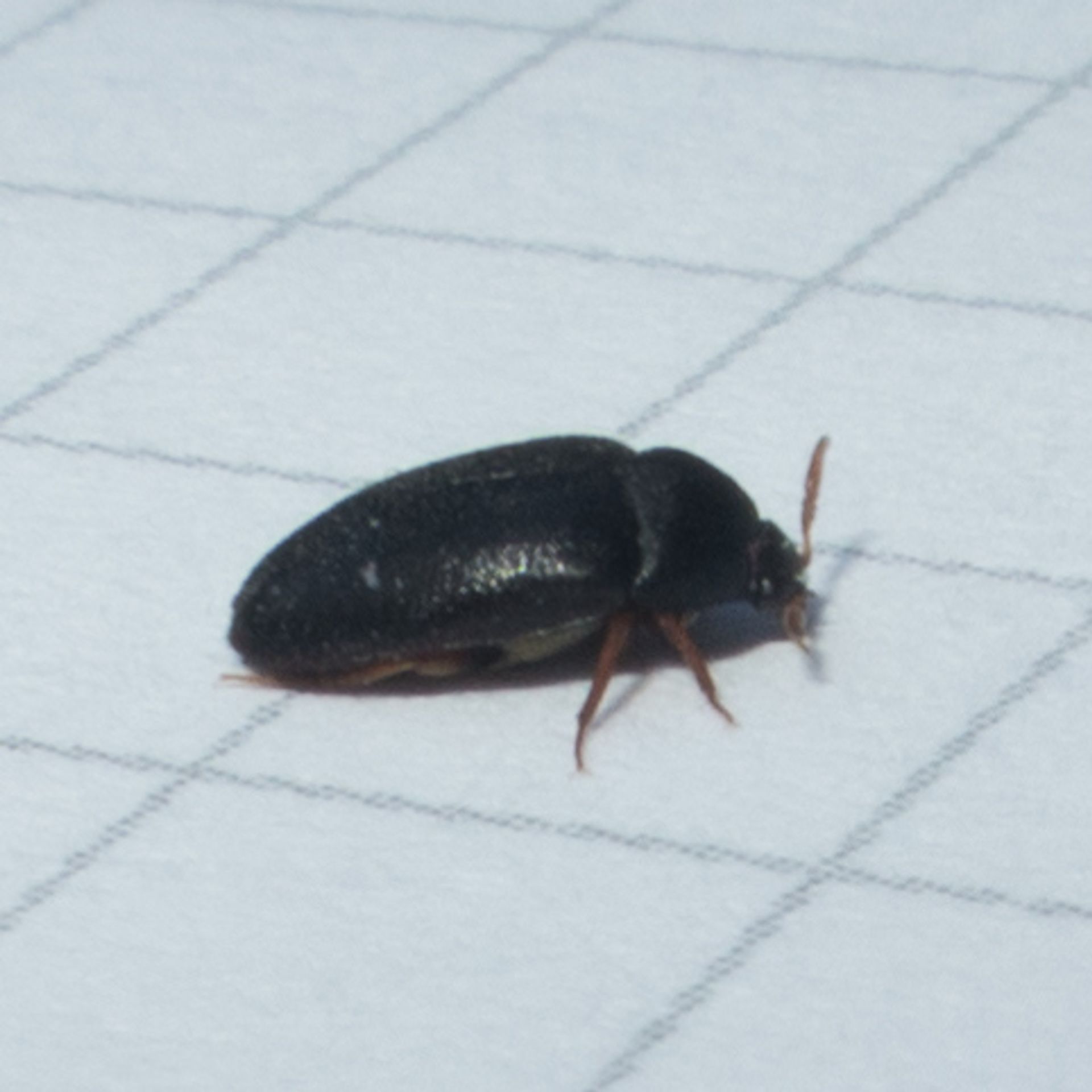
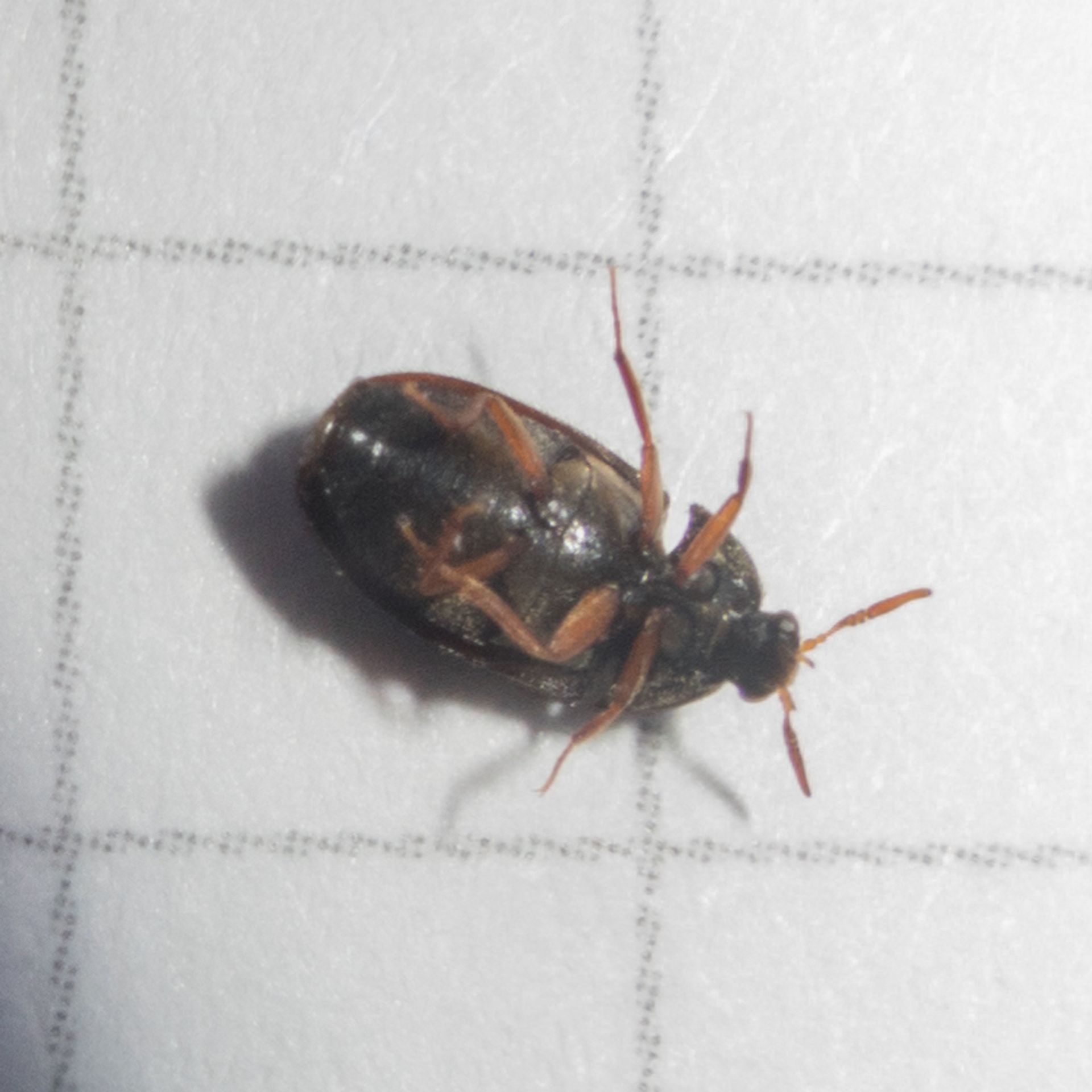
Attagenus brunneus is a small in the , measuring 2.9–5 mm as an . It is a detritivorous to North America that has become an in Europe, where it has been documented in buildings in Belarus. The species feeds on stored food products and materials of and animal origin.
Pronunciation
How to pronounce Attagenus brunneus: //ˌætəˈdʒɛnəs ˈbrʌniəs//
These audio files are automatically generated. While they are not always 100% accurate, they are a good starting point.
Identification
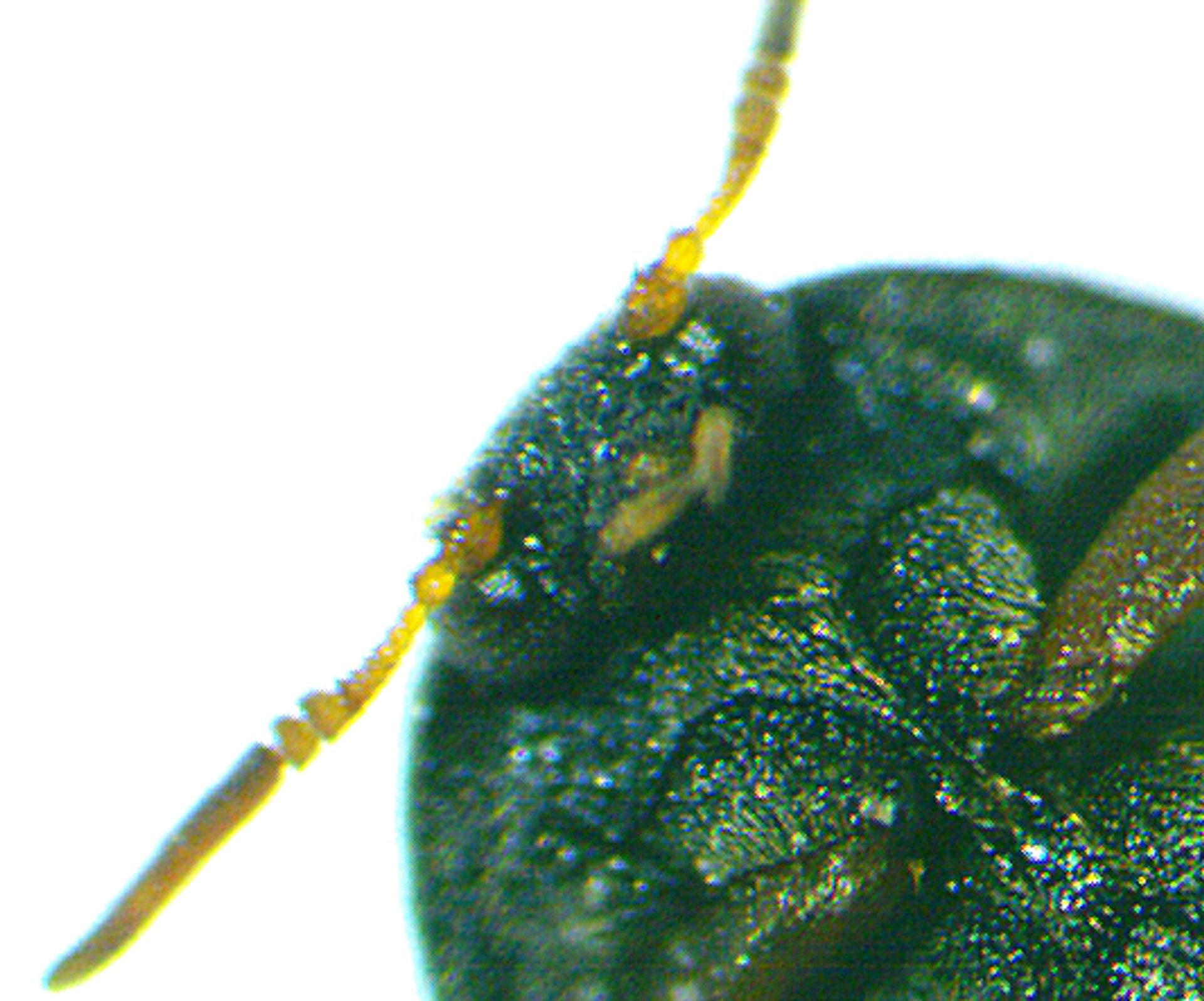
Could be confused with Attagenus unicolor and Attagenus schaefferi. Distinguished from Anthrenus by its more oval body shape and uniform dark coloration rather than round body with or spots of , black, and .
Images
Appearance
are 2.9–5 mm in length. As a member of the Attagenus, adults are more oval and uniformly dark in coloration compared to the rounder, patterned Anthrenus . are tapered from to back with a bundle of long hairs extending from the rear end; at maturity, larvae reach approximately 9.5–12.7 mm excluding the tail hairs.
Habitat
Primarily found indoors in buildings in its European range. In North America, occurs in environments where dried materials accumulate.
Distribution
to North America. in Europe, with confirmed records from Belarus and noted as present in Europe generally.
Diet
Detritivorous. feed on dried animal products including shed hair and skin , wool, , fur, animal hides, and dead . Also consumes dried matter including cereals and grains. feed on flower pollen.
Life Cycle
with , , , and stages. Larval stage is the destructive feeding phase.
Human Relevance
Considered a dangerous pest of stored food products and materials of and animal origin. Larval hairs can cause dermatitis in sensitive individuals, sometimes misdiagnosed as bites. require thorough cleaning, discarding infested items, and controlling moisture and food sources.
Similar Taxa
- Attagenus unicolorSimilar size, shape, and dark coloration; requires careful examination to distinguish
- Attagenus schaefferiOverlapping and preferences in the Attagenus
- Anthrenus spp.Both are in , but Anthrenus are rounder with patterned coloration ( or spots) while Attagenus are more oval and uniformly dark
More Details
Invasive Status
Documented as a new in Belarus in 2024, representing range expansion beyond its North distribution. The is established in buildings in Europe.
Sources and further reading
- BugGuide
- Wikipedia
- GBIF taxonomy match
- iNaturalist taxon
- NCBI Taxonomy
- Grasshoppers of Colorado
- Grasshoppers of Colorado
- Grasshoppers of Colorado
- Species Records and Accounts
- Bug Eric: November 2014
- Bug Eric: Carpet Beetles, Genus Anthrenus
- <i>ATTAGENUS BRUNNEUS </i>FALDERMANN, 1835 (COLEOPTERA: DERMESTIDAE), A NEW INVASIVE SPECIES OF CARPET BEETLES IN THE FAUNA OF BELARUS