
Orphinus
Motschulsky, 1858
Species Guides
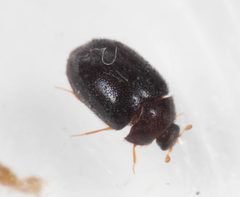
1- Orphinus fulvipes(carpet beetle)
Orphinus is a of skin beetles ( Dermestidae) containing approximately 88 . The genus is broadly distributed across tropical regions of Africa, Asia, and the Australian region, with at least one species. Like other dermestids, these beetles are associated with dried organic materials. The genus was established by Motschulsky in 1858.
Pronunciation
How to pronounce Orphinus: /ɔːrˈfaɪnəs/
These audio files are automatically generated. While they are not always 100% accurate, they are a good starting point.
Identification
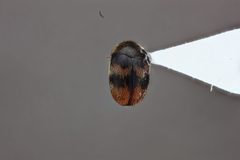
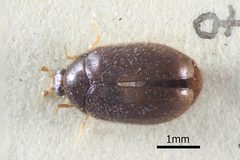
Orphinus can be distinguished from other dermestid by their placement in the tribe Megatomini. Definitive identification to species level requires examination of detailed morphological characters including antennal structure, elytral pattern, and male genitalia. The genus lacks the distinctive features of some other dermestid groups, such as the rounded body form of Anthrenus or the large size of Trogoderma.
Images
Habitat
Tropical and subtropical regions, with varying by . As members of Dermestidae, individual species likely occupy environments with access to dried organic substrates.
Distribution
Africa, Asia, and the Australian region, with concentration in tropical areas. At least one has distribution.
Ecological Role
As dermestid beetles, in this likely function as decomposers of dried animal and plant matter, contributing to nutrient cycling in their respective .
Similar Taxa
- AnthrenusAnother megatomine , but Anthrenus typically have more rounded, compact bodies and distinctive patterned ; Orphinus species generally lack these features.
- TrogodermaTrogoderma are generally larger and more robust than Orphinus, with different antennal club structure and more prominent setal patterns.
More Details
Taxonomic history
The was described by Victor Motschulsky in 1858 and has been maintained within the tribe Megatomini, Megatominae.
Species diversity
With approximately 88 described , Orphinus represents a moderately diverse within Dermestidae, though many species remain poorly studied.