
Podura
Linnaeus, 1758
Species Guides
1- Podura aquatica(water springtail)
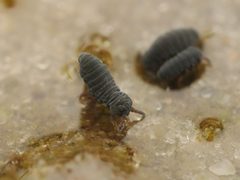
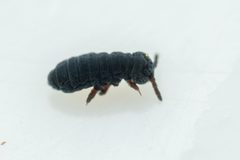
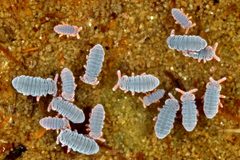
Podura is a of springtails (Collembola) constituting the sole genus of the Poduridae and superfamily Poduroidea. The genus contains four described , including the widespread Podura aquatica and two fossil species from Baltic amber. Members are characterized by their stout body form and are among the more morphologically distinct lineages.
Pronunciation
How to pronounce Podura: //poʊˈdjʊrə//
These audio files are automatically generated. While they are not always 100% accurate, they are a good starting point.
Identification
Stout-bodied springtails with a compact, robust build distinguishing them from the more slender forms typical of many other poduromorph . The family Poduridae is at the level, making identification to family and genus equivalent. -level identification requires examination of specific morphological characters not detailed in general sources.
Images
Distribution
Arctic and Sub-arctic regions; Europe; Mediterranean region; Northern Eurasia; Northern North America. The has a predominantly Holarctic distribution pattern.
Similar Taxa
- Other PoduromorphaPodura can be distinguished from other poduromorph springtails by its stout body form; most other in this order exhibit more slender or elongate body plans.
- EntomobryomorphaUnlike the elongate, often scaled springtails in Entomobryomorpha, Podura have a compact, robust body structure.