
Cyphoderus
Nicolet H, [1842]
Species Guides
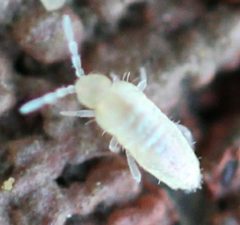
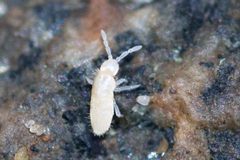
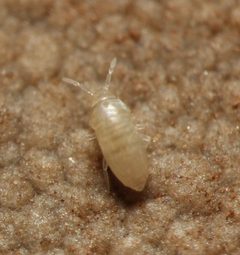
1Cyphoderus is a of elongate-bodied springtails (Collembola) in the Paronellidae, containing more than 20 described . Members are primarily soil-dwelling found in tropical and subtropical regions. Several species, particularly Cyphoderus javanus, have been extensively studied as model organisms for ecotoxicological research due to their sensitivity to chemical pollutants. The genus includes species associated with colonies, such as C. innominatus found in nests.
Pronunciation
How to pronounce Cyphoderus: //ˌsaɪ.foʊˈdɛr.əs//
These audio files are automatically generated. While they are not always 100% accurate, they are a good starting point.
Identification
Elongate body shape distinguishes Cyphoderus from globular springtails (Symphypleona). Within Paronellidae, identification requires examination of chaetotaxy (bristle arrangement) on and body. Two species groups recognized: 'tridenticulati' with three dental structures, and 'bidenticulati' with two. Specific identification keys exist for Brazilian species.
Images
Habitat
Soil and leaf litter in organic matter-rich top layers; lateritic soils; agricultural soils. Some occur in specialized microhabitats such as fungus gardens of colonies.
Distribution
Tropical and subtropical regions including: Western Ghats of India (Kerala); northern Brazil (Pará state); Atlantic Forest-Cerrado transition zone in São Paulo, Brazil. GBIF records indicate presence in African Indian Desert, Amazon, Andean, Antillean & South Florida, and Caribbean mainland regions.
Diet
Decaying leaves and organic matter; . Laboratory maintained on baker's yeast.
Host Associations
- Atta sexdens - commensal or Cyphoderus innominatus observed in early colonies, primarily in peripheral areas of fungus-garden-growing chambers; possible defensive by when springtails present
Life Cycle
with laid during multiple oviposition events; juveniles hatch from eggs and undergo moulting with exuvium deposition; development includes measurable and hatching success parameters.
Behavior
Highly sensitive to physical and chemical stresses; vulnerable to soil pollution. Easy to breed under laboratory conditions, facilitating use in toxicological studies.
Ecological Role
engineer contributing to soil , biological structure, and environmental stability. Involved in litter breakdown, organic matter , nutrient recycling, soil maturation, void formation, and water regulation. Decomposition processes supported by feeding activity on decaying plant material.
Human Relevance
Used extensively as a bioindicator and model organism for ecotoxicological studies, particularly for assessing effects of (, , herbicides) and industrial pollutants on soil fauna. Sensitivity to chemical makes it valuable for monitoring anthropogenic disturbance and soil health.
Similar Taxa
- Other Paronellidae generaSimilar elongate body form; distinguished by specific chaetotaxy patterns and dental structures
- Symphypleona (globular springtails)Distinguished by body shape: Cyphoderus elongate versus globular/circular body in Symphypleona
More Details
Taxonomic note
placement varies in some sources: iNaturalist lists as family, but authoritative sources (GBIF, NCBI, Catalogue of Life) place Cyphoderus in Paronellidae. The contains two recognized morphological groups: 'tridenticulati' and 'bidenticulati'.
Research significance
Cyphoderus javanus has become a standard test organism for soil ecotoxicology in tropical regions, with established protocols for measuring parameters including , survival, longevity, and enzymatic biomarkers (acetylcholinesterase, superoxide dismutase).
Sources and further reading
- BugGuide
- Wikipedia
- GBIF taxonomy match
- iNaturalist taxon
- NCBI Taxonomy
- Catalogue of Life
- Adverse effects of the cyfluthrin on Cyphoderus javanus Borner (Collembola) in soil
- Ill-effects of fytran on survival and reproduction of a tropical soil spring tail - Cyphoderus javanus Borner
- Two new Cyphoderus (Collembola: Paronellidae) of “tridenticulati” and “bidenticulati” groups from Brazilian Amazon
- Impacts of Herbicide Oxadiargyl on the Lifespan, Fecundity and Development of a Detritivore Springtail, Cyphoderus javanus
- First record of Cyphoderus innominatus Mills, 1938 (Collembola: Paronellidae) in Early Colonies of the Leaf-cutting Ant Atta sexdens
- Temporal changes of Collembola population and alterations of life history parameters and acetylcholinesterase and superoxide dismutase activities in Cyphoderus javanus (Collembola) as biomarkers of fly ash pollution in lateritic soil