
Entomobrya zona
Christiansen & Bellinger, 1980
Rocky Mountain Springtail
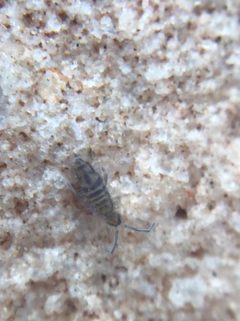
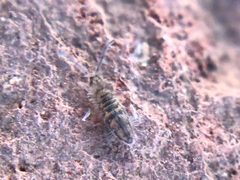
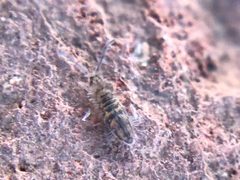
Entomobrya zona, commonly known as the Rocky Mountain , is a small springtail to the Rocky Mountains and known from three caves in the Grand Canyon. reach approximately 2 mm in length and are characterized by tan coloration with black markings, including a distinctive wide dark band running down the center of the . The species occurs at elevations from 1,700 to over 3,000 meters in arid environments and coniferous forests. It is frequently found in subterranean , where it is considered a troglophile.
Pronunciation
How to pronounce Entomobrya zona: /ɛnˌtoʊmoʊˈbraɪə ˈzoʊnə/
These audio files are automatically generated. While they are not always 100% accurate, they are a good starting point.
Identification
Entomobrya zona can be distinguished from similar Entomobrya by the combination of its tan body with black markings and a wide dark band running down the center of the . The species' restricted distribution in the Rocky Mountains and Grand Canyon region provides additional diagnostic context. measure approximately 2 mm in length.
Images
Habitat
Found in arid environments and coniferous forests in the Rocky Mountains and westward. Occurs at elevations ranging from 1,700 meters (5,600 feet) to over 3,000 meters (10,000 feet). Frequently observed in caves (entrance and twilight zones), under rocks, beneath wood logs, and among other debris.
Distribution
Rocky Mountains, United States; specifically documented from three caves in the Grand Canyon, Arizona.
Similar Taxa
- Entomobrya speciesOther Entomobrya share general body plan and coloration patterns; E. zona is distinguished by its specific abdominal banding pattern and geographic restriction to the Rocky Mountains and Grand Canyon region.
Sources and further reading
- BugGuide
- Wikipedia
- GBIF taxonomy match
- iNaturalist taxon
- Catalogue of Life
- Bare ground experiments to help save rare bees and wasps - Buglife Blog - Buglife
- Super Crop Challenge | Beetles In The Bush | Page 2
- A Nearly Extinct Butterfly Makes a Comeback in South Florida
- New Editors-in-Chief to lead invasion science journal NeoBiota
- Entomology Educators Play Key Role in Industry Product Advancement
- The Entomologist Who Almost Wasn't: A Tale on the Importance of Inclusive K-12 Education