
Coecobrya
Yosii, 1956
Species Guides
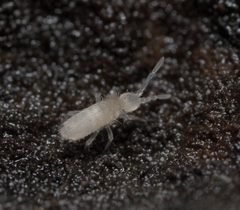
1Coecobrya is a of springtails (Collembola: Entomobryidae) characterized by pronounced troglomorphic adaptations in cave-dwelling . The genus includes both surface and subterranean species, with Thai cave species exhibiting the most extreme troglomorphy known for Collembola in Southeast Asia. Many species display elongated , legs and furca, reduced pigmentation, and loss. The genus has been recorded from caves in Thailand, South Africa, and other regions, with molecular studies supporting species discrimination using COI, 16S rDNA and 28S rDNA markers.
Pronunciation
How to pronounce Coecobrya: //koʊkoʊˈbraɪə//
These audio files are automatically generated. While they are not always 100% accurate, they are a good starting point.
Images
Habitat
Cave environments, particularly the dark zone with wet and moist conditions; some occur in oligotrophic cave lacking bat guano, while others inhabit eutrophic guano-rich areas. Laboratory cultures of C. microphthalma have been maintained at 26-27°C with 80-90% humidity in darkness.
Distribution
Southeast Asia (Thailand: Saraburi, Satun, Khon Kaen, Phetchabun, Phitsanulok provinces), South Africa (Cango Caves), with broader records from Andean region, Caribbean mainland, Central Australia, Continental S.E. Asia, and Europe based on GBIF data.
Life Cycle
Postembryonic development in C. microphthalma requires six to reach the stage. Development rate from to adult increases significantly with temperature in the 27-32°C range.
Behavior
Cave-dwelling exhibit extreme troglomorphy including complete absence of and pigmentation, elongated appendages, and slender claw complexes. C. microphthalma cannot survive temperatures above 32°C after 7-14 days exposure, with ceasing at temperatures where F1 survives to adulthood but cannot produce F2 offspring.
Ecological Role
in cave ; represents the most diversified and dominant of Collembola found in Thai caves. Contributes to cave biodiversity in tropical karst ecosystems and oligotrophic cave .
Similar Taxa
- SinellaBoth belong to tribe Sinellini and share general Entomobryidae ; Coecobrya is distinguished by specific chaetotaxy patterns and troglomorphic specializations in cave .
- EntomobryaBoth in Entomobryinae; Coecobrya differs in chaetotaxy details, particularly sublobal hair counts on the maxillary outer lobe and distribution of medio-sublateral macrochaetae.
More Details
Thermal tolerance
C. microphthalma has been experimentally shown to survive and reproduce at 27-32°C, with production duration and number of egg-laying days declining significantly as temperature increases. At 32°C, the F1 survives and to adulthood but cannot produce subsequent generations. This represents the first study of temperature impacts on and of a subterranean tropical Collembola.
Molecular systematics
discrimination has been supported by analysis of COI, 16S rDNA and 28S rDNA sequences, with phylogenetic studies revealing multiple independent lineages of troglomorphic species within the .
Troglomorphic diversity
Thai cave Coecobrya exhibit two morphological types: one associated with oligotrophic in the dark zone (extreme elongation, complete depigmentation, loss), and another found in eutrophic bat guano habitats (less extreme modifications, some pigmentation retained).
Sources and further reading
- BugGuide
- GBIF taxonomy match
- iNaturalist taxon
- NCBI Taxonomy
- Catalogue of Life
- Coecobrya sirindhornae sp. n., the most highly troglomorphic Collembola in Southeast Asia (Collembola, Entomobryidae)
- The Thermal Tolerance of Springtails in a Tropical Cave, with the Description of a New Coecobrya Species (Collembola: Entomobryidae) from Thailand
- Figure 13 from: Nilsai A, Detcharoen M, Godeiro NN, Jantarit S (2021) Four new species of troglomorphic Coecobrya Yosii, 1956 (Collembola, Entomobryidae) from Thailand based on morphological and molecular evidence, with an updated key of Thai troglomorphic species. Subterranean Biology 41: 1-42. https://doi.org/10.3897/subtbiol.41.76926
- Figure 10 from: Nilsai A, Detcharoen M, Godeiro NN, Jantarit S (2021) Four new species of troglomorphic Coecobrya Yosii, 1956 (Collembola, Entomobryidae) from Thailand based on morphological and molecular evidence, with an updated key of Thai troglomorphic species. Subterranean Biology 41: 1-42. https://doi.org/10.3897/subtbiol.41.76926
- Figure 4 from: Nilsai A, Detcharoen M, Godeiro NN, Jantarit S (2021) Four new species of troglomorphic Coecobrya Yosii, 1956 (Collembola, Entomobryidae) from Thailand based on morphological and molecular evidence, with an updated key of Thai troglomorphic species. Subterranean Biology 41: 1-42. https://doi.org/10.3897/subtbiol.41.76926
- A new cave species of Coecobrya Yosii (Collembola, Entomobryidae, Entomobryinae) from South Africa, with an identification key to the genus
- Figure 11 from: Nilsai A, Detcharoen M, Godeiro NN, Jantarit S (2021) Four new species of troglomorphic Coecobrya Yosii, 1956 (Collembola, Entomobryidae) from Thailand based on morphological and molecular evidence, with an updated key of Thai troglomorphic species. Subterranean Biology 41: 1-42. https://doi.org/10.3897/subtbiol.41.76926
- Figure 3 from: Nilsai A, Detcharoen M, Godeiro NN, Jantarit S (2021) Four new species of troglomorphic Coecobrya Yosii, 1956 (Collembola, Entomobryidae) from Thailand based on morphological and molecular evidence, with an updated key of Thai troglomorphic species. Subterranean Biology 41: 1-42. https://doi.org/10.3897/subtbiol.41.76926
- Figure 14 from: Nilsai A, Detcharoen M, Godeiro NN, Jantarit S (2021) Four new species of troglomorphic Coecobrya Yosii, 1956 (Collembola, Entomobryidae) from Thailand based on morphological and molecular evidence, with an updated key of Thai troglomorphic species. Subterranean Biology 41: 1-42. https://doi.org/10.3897/subtbiol.41.76926
- Figure 7 from: Nilsai A, Detcharoen M, Godeiro NN, Jantarit S (2021) Four new species of troglomorphic Coecobrya Yosii, 1956 (Collembola, Entomobryidae) from Thailand based on morphological and molecular evidence, with an updated key of Thai troglomorphic species. Subterranean Biology 41: 1-42. https://doi.org/10.3897/subtbiol.41.76926
- Figure 5 from: Nilsai A, Detcharoen M, Godeiro NN, Jantarit S (2021) Four new species of troglomorphic Coecobrya Yosii, 1956 (Collembola, Entomobryidae) from Thailand based on morphological and molecular evidence, with an updated key of Thai troglomorphic species. Subterranean Biology 41: 1-42. https://doi.org/10.3897/subtbiol.41.76926
- Figure 1 from: Nilsai A, Detcharoen M, Godeiro NN, Jantarit S (2021) Four new species of troglomorphic Coecobrya Yosii, 1956 (Collembola, Entomobryidae) from Thailand based on morphological and molecular evidence, with an updated key of Thai troglomorphic species. Subterranean Biology 41: 1-42. https://doi.org/10.3897/subtbiol.41.76926
- Figure 2 from: Nilsai A, Detcharoen M, Godeiro NN, Jantarit S (2021) Four new species of troglomorphic Coecobrya Yosii, 1956 (Collembola, Entomobryidae) from Thailand based on morphological and molecular evidence, with an updated key of Thai troglomorphic species. Subterranean Biology 41: 1-42. https://doi.org/10.3897/subtbiol.41.76926
- Figure 9 from: Nilsai A, Detcharoen M, Godeiro NN, Jantarit S (2021) Four new species of troglomorphic Coecobrya Yosii, 1956 (Collembola, Entomobryidae) from Thailand based on morphological and molecular evidence, with an updated key of Thai troglomorphic species. Subterranean Biology 41: 1-42. https://doi.org/10.3897/subtbiol.41.76926
- Figure 8 from: Nilsai A, Detcharoen M, Godeiro NN, Jantarit S (2021) Four new species of troglomorphic Coecobrya Yosii, 1956 (Collembola, Entomobryidae) from Thailand based on morphological and molecular evidence, with an updated key of Thai troglomorphic species. Subterranean Biology 41: 1-42. https://doi.org/10.3897/subtbiol.41.76926