
Anachemmis
Chamberlin, 1919
Species Guides
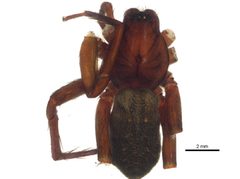
2Anachemmis is a of North American false wolf spiders in the Zoropsidae. First described by Ralph Vary Chamberlin in 1919, it was briefly synonymized with Titiotus before being reconfirmed as a distinct genus in 1999. The genus contains five distributed in the southwestern United States and Mexico. All species were described or redescribed by Platnick & Ubick in 2005.
Pronunciation
How to pronounce Anachemmis: /ˌænəˈkɛmɪs/
These audio files are automatically generated. While they are not always 100% accurate, they are a good starting point.
Identification
Anachemmis can be distinguished from the related Titiotus by genitalic characters, particularly male pedipalpal and female epigynal structures. The genus was revalidated based on these morphological differences. -level identification requires examination of reproductive structures.
Images
Habitat
occur in arid and semi-arid regions of the southwestern United States and Mexico. Specific microhabitat preferences are not well documented for most species.
Distribution
Southwestern United States (California, Arizona, Nevada, Utah) and Mexico (Baja California).
Similar Taxa
- TitiotusAnachemmis was briefly synonymized with Titiotus but differs in genitalic ; both are zoropsid found in western North America
- SocalchemmisFormerly included Anachemmis dolichopus was transferred to Socalchemmis; both occur in southern California
More Details
Taxonomic history
The type Anachemmis sober was described by Chamberlin in 1919. The was synonymized with Titiotus by Platnick in 1999, but this was reversed later that same year based on additional morphological study. Four additional species were described by Platnick & Ubick in 2005.
Species diversity
All five are restricted to the southwestern United States and adjacent Mexico, with most showing narrow geographic ranges. No species have been recorded outside this region.