
Bassaniana floridana
(Banks, 1896)
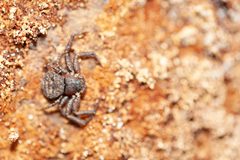
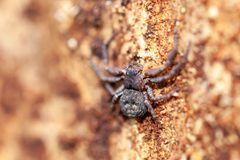
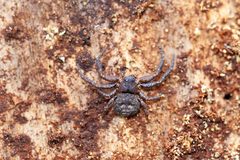
Bassaniana floridana is a crab spider in the Thomisidae, first described by Nathan Banks in 1896. The species occurs in the United States. As a member of the Bassaniana, it belongs to a group of spiders known for their ambush predatory and crab-like leg posture. Specific details about its and remain limited in published literature.
Pronunciation
How to pronounce Bassaniana floridana: //ˌbæsəˈnaɪə.nə flɔˈrɪdænə//
These audio files are automatically generated. While they are not always 100% accurate, they are a good starting point.
Identification
The slightly recurved row distinguishes this from some related crab spiders. Males can be recognized by the mottled pattern on the anterior legs. The Bassaniana is distinguished from similar crab spider genera by genitalic and somatic characters, though precise field identification to species level requires examination of these structural features. The species occurs in the eastern United States, which helps separate it from western Bassaniana species.
Images
Appearance
exhibit the characteristic crab spider body plan: broad, somewhat flattened and with legs typically held laterally in a crab-like fashion. The row is slightly recurved. Males have slightly mottled anterior legs. Like other Bassaniana , the body is relatively compact with coloration that provides camouflage against bark and vegetation.
Habitat
Specific preferences are not well documented. Based on -level patterns, likely occupies wooded areas where bark and vegetation provide hunting substrates. Found in the United States; precise microhabitat requirements remain unstudied.
Distribution
United States. Records indicate occurrence in the eastern U.S., though specific state-level distribution requires further documentation. The specific epithet 'floridana' suggests historical association with Florida, but this has not been confirmed in recent literature.
Behavior
As a crab spider (Thomisidae), exhibits ambush : waits motionless on vegetation or bark for approaching prey, then seizes it with enlarged front legs. Does not build capture webs. Detailed behavioral studies for this have not been published.
Ecological Role
of small arthropods; likely contributes to regulation of insect in forest and woodland . Specific ecological impacts unstudied.
Human Relevance
No documented economic or medical importance. Not known to bite humans; venom is not considered medically significant. Occasional incidental encounters in wooded areas.
Similar Taxa
- Bassaniana utahensisWestern North American ; distinguished by geographic range and subtle differences in genitalic .
- Other Thomisidae genera (e.g., Misumena, Xysticus)Similar crab-like and ambush ; distinguished by arrangement, leg proportions, and genitalic characters.
More Details
Taxonomic History
Described by Nathan Banks in 1896. The Bassaniana has undergone taxonomic revision, with some transferred to or from related genera. Current classification places this species in Thomisidae, the crab spider .
Research Needs
Basic including specificity, prey preferences, , and detailed distribution remain undocumented for this . No published studies specifically address B. floridana or .
Sources and further reading
- BugGuide
- Wikipedia
- GBIF taxonomy match
- iNaturalist taxon
- Catalogue of Life
- Rediscovery of Cicindela scabrosa floridana | Beetles In The Bush
- Photographing the Newly Rediscovered Cicindelidia floridana | Beetles In The Bush
- The (almost) Florida-endemic Cicindelidia scabrosa | Beetles In The Bush
- Mini-review of the Cicindelidia abdominalis species-group | Beetles In The Bush
- Why I Roamed the Marsh at Night | Beetles In The Bush
- ID Challenge #10 | Beetles In The Bush