
Thymoites unimaculatus
(Emerton, 1882)
Spotted Cobweaver
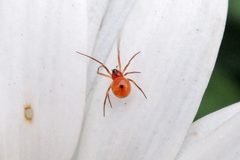
Thymoites unimaculatus, commonly known as the Spotted Cobweaver, is a of cobweb spider in the Theridiidae. It was first described by Emerton in 1882. The species is known from North America, with confirmed records from the United States and Canada. Like other members of its family, it constructs irregular, tangled webs.
Pronunciation
How to pronounce Thymoites unimaculatus: /ˌθaɪ.moʊˈiː.tiːz ˌjuː.nɪˌmæk.juˈleɪ.təs/
These audio files are automatically generated. While they are not always 100% accurate, they are a good starting point.
Identification
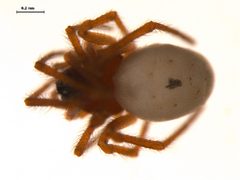
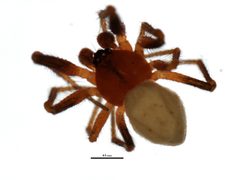
The specific epithet 'unimaculatus' (meaning 'one-spotted') suggests a diagnostic single spot marking, though detailed morphological descriptions are not readily available in the provided sources. As a member of Theridiidae, it likely possesses the -typical comb of serrated setae on the of the hind legs (calamistrum) used for silk handling. Definitive identification requires examination of genitalia and comparison with .
Images
Distribution
United States and Canada. GBIF records indicate multiple observations across the USA, though specific states or provinces are not detailed in the provided sources.
Behavior
Constructs cobwebs—irregular, three-dimensional tangled webs characteristic of the Theridiidae.
Similar Taxa
- Other Thymoites species share the same general body plan and web architecture; -level identification requires examination of genitalic structures.
- Other TheridiidaeMany cobweb spiders in this produce similar web structures; Thymoites is distinguished by specific morphological characters including genitalic configuration.
More Details
Taxonomic authority
The was originally described by James Henry Emerton in 1882, a prominent American arachnologist.
Observation frequency
iNaturalist records 232 observations, suggesting it is encountered with moderate frequency by naturalists, though this may reflect observer effort rather than true abundance.