
Decaphora cubana
(Banks, 1909)
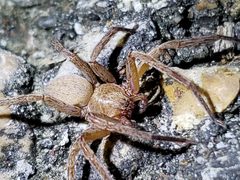
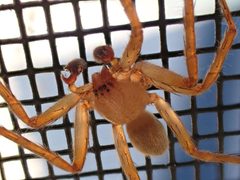
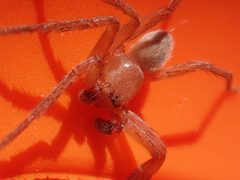
Decaphora cubana is a of huntsman spider in the Sparassidae. First described by Nathan Banks in 1909, this species is native to the Caribbean region. It belongs to a characterized by flattened body forms adapted for hiding in narrow crevices. Records indicate presence in Cuba, the Bahamas, and the United States, though specific details of its remain poorly documented.
Pronunciation
How to pronounce Decaphora cubana: //ˌdɛkəˈfɔːrə kjuːˈbɑːnə//
These audio files are automatically generated. While they are not always 100% accurate, they are a good starting point.
Identification
May be distinguished from other Caribbean Sparassidae by genitalic , particularly male structure. Members of Decaphora generally exhibit a dorsoventrally flattened body and laterally extended legs, adaptations for crevice-dwelling. Specific diagnostic characters for D. cubana require examination of or original description.
Images
Distribution
Cuba; Bahamas; United States (southern Florida). Records suggest Caribbean-native distribution with possible expansion or anthropogenic transport to North America.
Similar Taxa
- Heteropoda venatoriaAlso a large, flattened Sparassidae present in the Caribbean and southern Florida; D. cubana may be distinguished by -level characters including arrangement and genitalic structure.
- Other Decaphora speciesSeveral occur in the Caribbean; -level identification requires examination of reproductive structures and comparison with .
More Details
Taxonomic note
The Decaphora was established by Franganillo in 1930 and has undergone periodic revision. The placement of D. cubana within this genus reflects updated classification; original description was in the genus Heteropoda.