
Phanias
F. O. Pickard-Cambridge, 1901
Species Guides
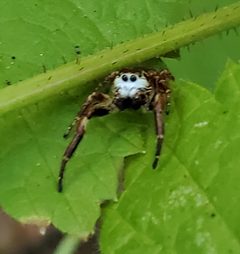
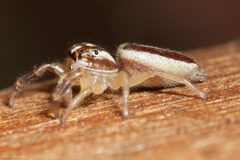
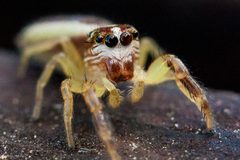
4Phanias is a of jumping spiders in the Salticidae, established by F. O. Pickard-Cambridge in 1901. Members of this genus are found primarily in the Americas, with many distributed across western North America and parts of Central and South America. The genus is characterized by typical salticid features including large that provide acute vision for hunting and navigation. Phanias species are active that rely on vision and jumping ability to capture prey.
Pronunciation
How to pronounce Phanias: //ˈfeɪniəs//
These audio files are automatically generated. While they are not always 100% accurate, they are a good starting point.
Identification
Phanias can be distinguished from other salticid by a combination of genitalic characters, particularly male palpal bulb and female epigynal structure. The often shows distinctive patterning, and the arrangement follows the typical salticid pattern with a single row of four small eyes and two large eyes. Species-level identification requires examination of preserved specimens and reference to original species descriptions.
Images
Habitat
in this occupy diverse terrestrial including leaf litter, ground cover, and low vegetation in forested and open environments. Many western North American species are associated with chaparral, woodland, and montane habitats. Some species have been collected from coastal dunes and desert scrub.
Distribution
The is distributed primarily in the New World, with the majority of occurring in western North America from British Columbia to Baja California, extending eastward to the Rocky Mountains. Additional species are found in Central America and South America, including the Caribbean.
Behavior
As jumping spiders, Phanias are active hunters that stalk and pounce on prey rather than building webs for capture. They possess excellent vision used for prey detection, mate recognition, and complex . Males perform visual courtship displays involving leg waving and movements to attract females.
Ecological Role
Phanias function as of small arthropods in their , contributing to the regulation of insect and other . Their role as hunters places them within the ground-dwelling and vegetation-dwelling predator guilds of their respective .
Human Relevance
Phanias has no documented direct economic or medical significance to humans. The is of interest to arachnologists studying salticid diversity and , particularly in western North America where several occur.
Similar Taxa
- HabronattusBoth are New World salticid with western North American distributions and complex male ; Habronattus is distinguished by often more elaborate coloration and distinct genitalic
- PellenesSimilar in general habitus and preferences; Pellenes typically show different abdominal patterning and male palpal structure
More Details
Taxonomic History
The Phanias was erected by Frederick Octavius Pickard-Cambridge in 1901 based on specimens from Central America. The genus has undergone significant revision, with many transferred to or from related genera as salticid has advanced. Recent molecular and morphological studies have helped clarify its placement within the Salticidae, though relationships to other genera in the Salticinae remain under investigation.
Species Diversity
The contains approximately 15-20 described , though this number has fluctuated with taxonomic revisions. Several species remain poorly known and are represented by few specimens. The western North American fauna has received the most study, while Central and South American species are less well documented.