
Pardosa xerampelina
(Keyserling, 1877)
Ubiquitous Thin-legged Wolf Spider
Pardosa xerampelina is a small to medium-sized wolf spider in the Lycosidae, commonly known as the Ubiquitous Thin-legged Wolf Spider. The is widely distributed across North America, occurring throughout the United States and Canada including Alberta and British Columbia. As a member of the Pardosa, it shares the characteristic long, perpendicular leg spines that distinguish thin-legged wolf spiders from other lycosids. The species epithet "xerampelina" derives from Greek roots referring to color change, possibly alluding to seasonal or individual variation in appearance.
Pronunciation
How to pronounce Pardosa xerampelina: //pɑːɹˈdoʊsə zɛɹˌæmpəˈlaɪnə//
These audio files are automatically generated. While they are not always 100% accurate, they are a good starting point.
Identification
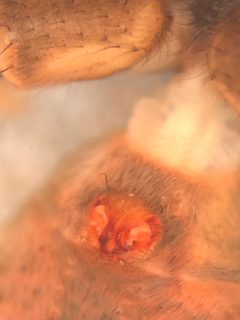
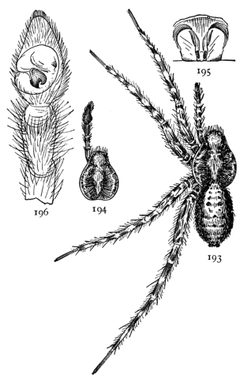
Identification of Pardosa xerampelina to level requires microscopic examination of genitalia. Females possess a paired ; males have highly modified resembling small boxing gloves. The Pardosa is distinguished from other wolf spiders by long spines on the legs that are almost perpendicular to the leg axis, particularly visible on the hind pair of legs, rather than the shorter, more parallel spines of other Lycosidae. The is higher than in most other wolf spiders with nearly vertical sides of the .
Images
Distribution
Found throughout the United States and Canada. Documented occurrences include Alberta and British Columbia in Canada, with presence recorded across North America.
Similar Taxa
- Pardosa spp.Other thin-legged wolf spiders share the characteristic perpendicular leg spines and elevated ; -level identification requires examination of genitalia
- Other Lycosidae generaNon-Pardosa wolf spiders have shorter leg spines oriented more parallel to the leg surface, and a less steeply sloping