
Pardosa lapidicina
Emerton, 1885
Stone Spider
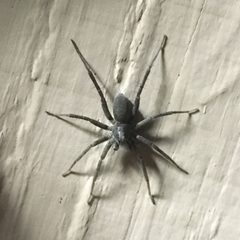
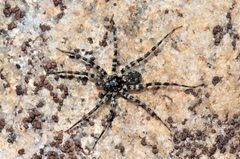
Pardosa lapidicina, commonly known as the stone spider, is a small wolf spider in the Lycosidae. It inhabits cobble beaches and rocky shorelines near water, particularly above the tide line. The exhibits distinctive patterns tied to tidal cycles and seasonal temperature changes. Research has documented its use of sit-and-wait foraging combined with sun-basking, and its diet includes small arthropods such as dipterans, collembolans, and amphipods. Males recognize females through a contact located on the female's and legs, requiring physical contact for detection.
Pronunciation
How to pronounce Pardosa lapidicina: /pɑrˈdoʊsə ˌlæpɪˈdɪsɪnə/
These audio files are automatically generated. While they are not always 100% accurate, they are a good starting point.
Identification
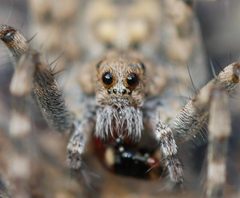
Distinguished from other wolf spiders by the perpendicular long spines on the legs, particularly visible on the hind pair. identification requires microscopic examination of genitalia: females possess a paired , while males have modified resembling small boxing gloves. Mature males may exhibit different color patterns from females. Distinguished from the related species Pardosa milvina by species-specific contact chemistry, to which P. lapidicina males do not respond.
Images
Habitat
Primarily found near water, including cobble beaches above the tide line, rocky streambeds, and shorelines of lakes and bays. Occupies both open beach areas and beaches with salt-marsh grass. In Rhode Island, documented at densities of 30 individuals per 0.5 m along shorelines. Also found in woodland areas and fields near water.
Distribution
United States and Canada. Documented in Rhode Island (Narragansett Bay area), with records from Vermont and other states. North American distribution.
Seasonality
Active year-round with seasonal movement patterns. During winter months (April-November in study area), remain close to the beach. In warmer months, approximately one-third of the population moves with tides. Overwinters as or immatures.
Diet
Active feeding on small arthropods. Documented prey includes Diptera (flies), Collembola (springtails), and amphipods. Captures more than one prey item per day under observed conditions.
Behavior
Employs a sit-and-wait foraging strategy combined with frequent sun-basking. Exhibits tidal patterns: remains near the beach during cooler months, with approximately one-third of the moving with tides during warmer months. Males detect females through a contact located on the female's and legs; the requires physical contact and is not volatile. Upon contact with pheromone-bearing females, males perform including leg tapping and palpal drumming. The pheromone is -specific—males do not respond to females of Pardosa milvina—and remains detectable after mating.
Ecological Role
Small in shoreline and riparian . Documented at high densities in suitable (30 individuals per 0.5 m), suggesting significant predatory impact on small in these environments.
Similar Taxa
- Pardosa milvinaClosely related in same ; distinguished by species-specific contact to which P. lapidicina males do not respond
- Other Pardosa speciesRequires microscopic examination of genitalia ( in females, modified in males) for definitive identification; many species overlap in general appearance and preference
More Details
Research History
Subject of behavioral research by Douglass Morse at Brown University, who documented , patterns, and foraging at cobble beaches in Rhode Island.
Pheromone Biology
Contact is quickly inactivated by water, suggesting an to the moist shoreline where this occurs. The system represents a facultative sexual stimulus that can be bypassed if the male directly contacts the female.
Sources and further reading
- BugGuide
- Wikipedia
- GBIF taxonomy match
- iNaturalist taxon
- NCBI Taxonomy
- Catalogue of Life
- Bug Eric: July 2015
- Bug Eric: Wasp Wednesday: Ageniella accepta/conflicta
- Bug Eric: Spider Sunday: Spring Spiders
- Adelgidae | Beetles In The Bush
- The contact sex pheromone of Pardosa lapidicina Emerton (Araneida: Lycosidae)