
Micaria
Westring, 1851
ant spiders
Species Guides
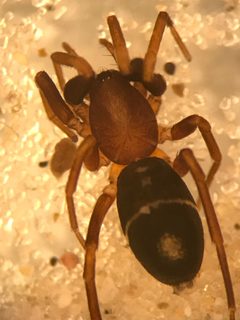
14Micaria is a of small ground spiders in the Gnaphosidae, first described by Niklas Westring in 1851. The genus contains over 127 distributed across the Holarctic, Indomalayan, Australasian, and Afrotropical regions. These spiders are commonly known as ant spiders due to their pronounced -mimicking appearance and . Most species are ground-dwelling and primarily , hunting on the substrate surface. The type species is Micaria fulgens.
Pronunciation
How to pronounce Micaria: /mɪˈkɛəriə/
These audio files are automatically generated. While they are not always 100% accurate, they are a good starting point.
Identification
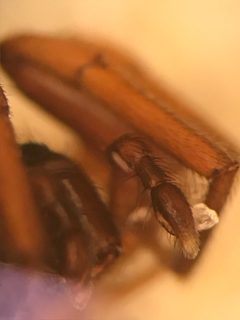
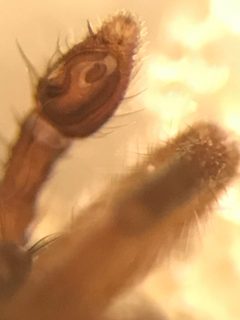
Micaria can be distinguished from other gnaphosid by the piriform gland spigots, which are similar in size to the major ampullate gland spigots. The genus is further characterized by small body size (1.3–6.5 mm, with most 1.85–5 mm), -like body form, and ground-dwelling habits. Species delineation within Micaria is challenging due to exceptionally high intraspecific morphological variation that obscures species boundaries, necessitating integrative taxonomic approaches combining molecular data, morphometrics, and genitalic characters.
Images
Habitat
Ground-dwelling; occupy terrestrial across diverse including temperate, tropical, and arid regions. Specific microhabitat associations vary by species.
Distribution
Holarctic, Indomalayan, Australasian, and Afrotropical zoogeographic regions. Documented from Europe (including Poland, with M. nivosa recorded as rare), Turkey (M. formicaria), China, South Africa (Northern Cape, Western Cape, KwaZulu-Natal, Free State provinces), Namibia, and throughout the Afrotropical Region.
Behavior
-mimicking is a defining characteristic of the . Micaria sociabilis exhibits reversed sexual , in which males kill and consume females; this behavior has been observed as a male foraging strategy influenced by prey availability, male feeding history during ontogeny, and female-biased sex ratios. Reversed sexual cannibalism frequency increases when males encounter reduced prey availability after developing during periods of high prey occurrence.
Ecological Role
Ground-dwelling that hunt on the substrate surface. -mimicry likely provides protective resemblance and may facilitate prey capture or predator avoidance.
Sources and further reading
- BugGuide
- Wikipedia
- iNaturalist taxon
- NCBI Taxonomy
- Catalogue of Life
- Redescription of Micaria beaufortia (Araneae, Gnaphosidae), with notes on Afrotropical Micaria
- Chromosome Analysis of Micaria formicaria (Araneae: Gnaphosidae) Species Distributionin Turkey
- New data on distribution of Micaria nivosa L. Koch (Araneae: Gnaphosidae) in Poland
- Contrasting climate change responses: habitat contraction vs. altitudinal shift in Chinese Micaria spiders
- Revision and molecular phylogeny of the spider genus Micaria Westring, 1851 (Araneae: Gnaphosidae) in the Afrotropical Region
- Cryptic diversity in ant‐mimic Micaria spiders (Araneae, Gnaphosidae) and a tribute to early naturalists
- Eat or Not to Eat: Reversed Sexual Cannibalism as a Male Foraging Strategy in the SpiderMicaria sociabilis(Araneae: Gnaphosidae)