
Singa
C. L. Koch, 1836
striped orb-weavers
Species Guides
2- Singa eugeni(Eugen's Orbweaver)
- Singa keyserlingi
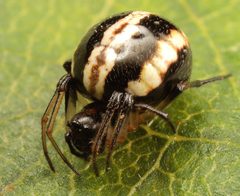
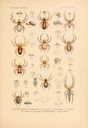
Singa is a of small orb-weaver spiders in the Araneidae, commonly known as striped orb-weavers. First described by C. L. Koch in 1836, these spiders are diminutive for orb-weavers, with body lengths typically not exceeding 6 millimetres. The genus is characterized by its distinctive striped patterning and classic orb-web construction.
Pronunciation
How to pronounce Singa: //ˈsɪŋɡə//
These audio files are automatically generated. While they are not always 100% accurate, they are a good starting point.
Identification
Singa can be distinguished from other small orb-weavers by their compact body size and characteristic striped abdominal patterning. They reach 6 mm or less in body length, noticeably smaller than many common orb-weaver such as Araneus. The combination of small stature, orb-web architecture, and striped coloration separates them from similar-sized genera in related .
Images
Distribution
Records from Denmark (DK), Norway (NO), and Sweden (SE) indicate a Palearctic distribution, though the full range likely extends more broadly across Europe and potentially into Asia.
Behavior
Constructs classic orb-webs for prey capture.
Similar Taxa
- AraneusAraneus are also orb-weavers in Araneidae but are generally larger and lack the distinctive small size and striped patterning of Singa.
- ZygiellaZygiella are small orb-weavers with similar preferences, but they construct webs with a characteristic missing sector and have different abdominal patterning.
Sources and further reading
- BugGuide
- Wikipedia
- GBIF taxonomy match
- iNaturalist taxon
- NCBI Taxonomy
- Catalogue of Life
- Living on the Edge | Bug Squad
- Photographing Spiders in Singapore: A Night Hike With Photographer Nicky Bay
- Study Explores How Flower-Eating Katydids Pick Their Meals
- These Caterpillars Go Bananas for Fruity Smells—and So Do Their Offspring
- How Butterflies Pattern Top and Bottom Wing Surfaces Differently
- New giant sea bug species named after Darth Vader
- HEWAN SINGA SIMBOL IDENTITAS BUDAYA MASYARAKAT MALANG